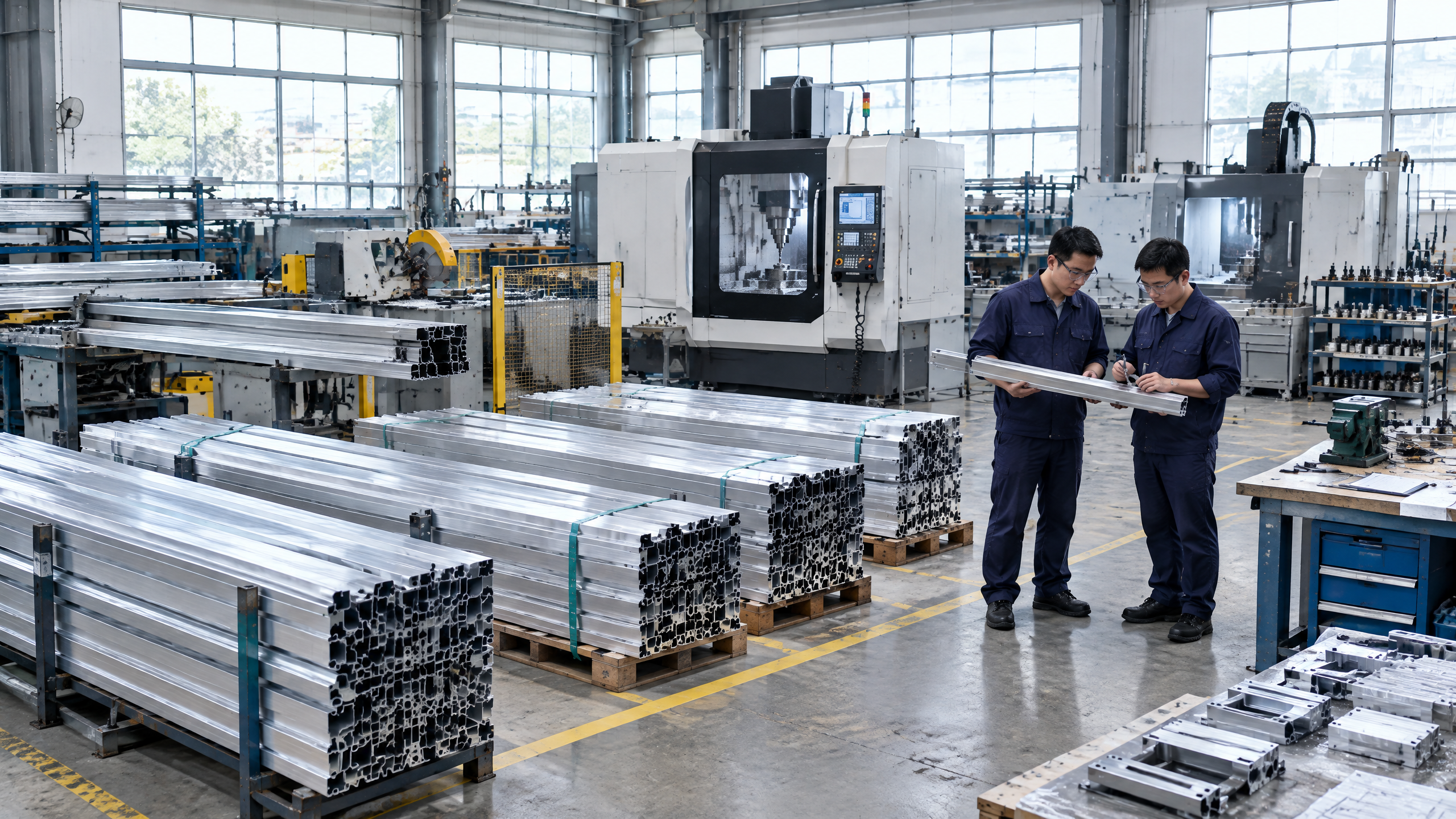
Direct answer (decision summary) Confirm that the factory can consistently produce the scope, volume and documented outputs your project requires: verified equipment and throughput for the planned unit mix; repeatable fabrication tolerances and weld/connection practices; reliable material traceability and protective finishes; a documented inspection flow and acceptance criteria; export and packing workflows matched to your delivery terms; and complete engineering deliverables you can use for permitting, procurement and installation. Verify these items with records, third‑party test evidence and a staged inspection (incoming materials → in‑process → final packing). Do not treat a single tour or verbal assurance as sufficient — require documented sampling, supplier performance history and a clear remediation plan when nonconformances occur. Engage your local engineers and permit authorities to interpret factory outputs for site safety and compliance.
Why production capability matters for B2B carport procurement
Production capability translates design into on‑site performance. For distributors, EPCs, developers and architects the central questions are: will the factory deliver the right parts, in the right sequence, with consistent quality and traceable materials so that site installation proceeds without rework? Auditing production capability reduces schedule risk, limits hold‑ups at customs and lowers on‑site labour variation. The remainder of this guide explains what to check, how to evidence it, and a practical buyer workflow to follow before you sign purchase terms.
Scope boundaries — what this guide does and does not cover
This guide focuses on assessing the factory’s ability to manufacture carport systems to a repeatable, auditable standard and to supply the documentation and logistics needed for installation and commissioning. It does not promise or interpret:
- structural capacity numbers, local permit approval, or code compliance for any site;
- delivery lead time, final price, energy yield or warranty outcomes.
Final, site‑specific decisions and approvals must be made by qualified local structural engineers, statutory authorities, utility providers and the installation contractor.
Key components of carport factory audit production capability
A production capability audit should examine a factory across several disciplines. Confirm the presence and performance of each component, and collect supporting records.
- Manufacturing infrastructure: the mills, CNC machines, brake presses, punching and welding stations, anodising/painting lines or treatment arrangements, and assembly jigs.
- Workforce and skills: documented training, crew sizes, shift patterns, and multi‑skilled personnel for finishing and assembly.
- Materials supply chain: traceability of aluminium alloys, fasteners, protective coatings and any third‑party components.
- Process controls: work instructions, in‑process inspection points and defect containment procedures.
- Throughput and scheduling: realistic output rates for the product mix you require and documented changeover times for variants.
- Packaging and sequencing for site delivery: how items are protected, labelled and kitted per site or PV string.
- Export handling and customs documentation: packaging, palletisation, and familiarity with buyer’s import rules.
Verifying the factory quality system
Ask for documented evidence of the factory’s management and quality routines. Request process maps, inspection plans and sample records.
- Look for a structured quality manual, incoming materials inspection reports, in‑process control checklists, and final inspection records.
- Confirm the existence of a nonconforming product process and an associated corrective action loop.
- If the supplier references a management standard, tie it to recognised frameworks when possible. See ISO guidance on quality systems for how management processes are usually structured[2].
Use targeted checks: witness an incoming aluminium certificate, review weld procedure qualifications, and examine finished part tolerances against drawing callouts.
Note: carport factory audit quality system
Documentation and engineering deliverables you must receive
Factory documentation is the bridge between procurement and installation. Confirm the factory will supply a complete set that your engineers and installers can work from.
- A design drawing set with part‑level details and assembly views that aligns to your project scopes.
- A parts list that supports procurement and customs classification.
- An installation sequence and field‑fit instructions for contractor use.
Specifically request and review the following items before contract acceptance:
- carport technical documentation drawing package
- carport technical documentation bill of materials
- carport technical documentation installation manual
Ensure the drawing package identifies critical dimensions, steel/aluminium grades, surface treatments and fastener specifications.
Materials, corrosion protection and finishing
Aluminium fabrication quality depends on alloy selection, surface treatment and weld/fastener practice. Verify material certificates (mill test reports), finishing process logs and surface inspection results.
Where hot‑dip galvanising or steel components exist, confirm the factory’s processes or subcontractor arrangements and request evidence of the method and coating thickness. For general guidance on galvanizing and corrosion protection, refer to recommended industry practice[1].
Ask: How does the factory control batch identity from incoming material through to final packing? Can they segregate nonconforming material? Are finishing tolerances recorded and sampled?
Export packing, logistics and documentation
For international B2B projects, the factory’s export competence is as important as its manufacturing capability. Confirm the factory understands buyer terms and can produce compliant shipping documentation.
- Confirm handling and packing standards for sea or air transport, kitting for sequential site deliveries, and labelling for customs.
- Inspect sample export packs and palletisation solutions for protection against mechanical and moisture damage.
- Validate the factory’s experience with your trade lane, HS codes and preferred Incoterm. Incoterms define commercial responsibilities and risk transfer for transport and should be agreed up front[3].
- Check the factory can produce the commercial invoice, packing list, and any origin certificates you require; cross‑check import documentation needs with customs guidance[4].
Note: carport factory audit export experience
Supplier due diligence and commercial checks
Technical capability must be matched with business reliability. Validate corporate standing, payment terms, and historical performance with references.
- Perform supplier checks: corporate registration, financial health indicators, export references and delivery history for similar projects.
- Require samples or production lots as proof of consistency; insist on pilot runs for new tooling or custom geometries.
- Include contractual remedies for nonconformance and clearly defined acceptance criteria in purchase orders.
Note: carport factory audit supplier due diligence
Two decision tables for audit outcomes
Decision table: Production capability assessment — go/no‑go indicators
| Area audited | Acceptable evidence | Decision trigger |
|---|---|---|
| Machinery & jigs | Equipment inventory + maintenance log | Pass if equipment matches process needs; else require remediation |
| Workforce competence | Training records, badge lists, WPS for welders | Pass if certified staff assigned; else require competency plan |
| Material traceability | Mill test reports; batch coding | Pass if traceable to finished parts; else quarantine |
| Quality records | Incoming/IPP/final inspection records | Pass if records present and consistent; else corrective action |
| Packaging & export | Sample packs; documentation templates | Pass if compliant with Incoterm and buyer needs; else modify specs |
Decision table: Common nonconformances and immediate buyer actions
| Nonconformance | Short term action | Buyer impact |
|---|---|---|
| Missing MTRs | Hold shipment, require certs | Delay to delivery |
| Incomplete drawing details | Request revision and sign‑off | Potential site rework |
| Damaged packing samples | Amend packaging spec; re‑pack | Cost and schedule risk |
| Unrecorded process changes | Require process trace and reinspection | Quality uncertainty |
Practical sampling and inspection techniques
Do not rely solely on a factory tour. Use objective sampling and documented inspection.
- Request production samples from representative batches (early, mid and late) and inspect dimensional tolerances, fit of bolt connections and finish quality.
- Witness a live shop‑floor inspection or request time‑stamped inspection records for comparable shipments.
- Require photos of the first complete kit for your order before despatch and identify any critical items that must be checked by your installer on arrival.
Buyer workflow: Five‑step Carport Buyer Validation
Follow this named workflow before final acceptance.
- Define scope and deliverables — specify system types from the Carportiva system range and site requirements. Link product scope to all systems.
- Pre‑audit documentation request — obtain factory QMS summary, equipment list, MTR samples, packing spec and sample drawings.
- On‑site audit or remote evidence review — verify process controls, inspect sample parts and review inspection records.
- Pilot production and sign‑off — approve a pilot kit or production batch against the agreed drawing package and bill of materials.
- Contractual acceptance with packing & export confirmation — confirm packing, documentation and delivery Incoterm; then place order with staged acceptance criteria.
Mid‑article action Ready to validate a supplier or schedule a production audit? Start an inquiry via /inquiry or email our procurement team at info@carportiva.com to request audit templates and our standard factory checklist.
Contract terms and delivery considerations
Link production findings to commercial terms. Define acceptance tests, inspection points and remedies in the purchase order.
- Use clear acceptance criteria: what constitutes acceptable tolerances, finish quality and completeness of kitting?
- Define buyer‑inspected milestones and payment triggers.
- Agree the Incoterm and who arranges export licences, duties and local delivery. Refer to the Incoterms rules when specifying responsibilities between seller and buyer[3].
- Clarify who pays for rework or repacking discovered at destination.
Risk mitigation and escalation
Prepare for found issues by defining escalation paths.
- Require a documented corrective action plan within a fixed SLA if nonconformance is found.
- Set financial holdbacks or acceptance matrices for the first shipments.
- For large or phased projects, plan staged releases with increasing batch sizes after repeated pass results.
Two decision tables: acceptance gating and documentation deliverables
Decision table: Acceptance gating for first shipment
| Gate | Evidence required | Release decision |
|---|---|---|
| Gate 1: Documentation | Complete drawing package, BOM, installation manual | Approve to proceed to pilot |
| Gate 2: Pilot production | Pilot kit inspection report + photos | Approve production release |
| Gate 3: Packing & export | Sample packing + export doc templates | Approve shipment |
Decision table: Minimal documentation pack for buyer handover
| Document | Purpose | Must be provided |
|---|---|---|
| Drawing package | Site assembly, permits | Yes |
| Bill of materials | Procurement, customs | Yes |
| Installation manual | Installer instructions | Yes |
| Material certificates | Traceability | Yes |
| Packing list & labels | Logistics, customs | Yes |
How to incorporate factory audit findings into your procurement
Translate audit outputs into contractual language:
- Attach the documentation pack as a contract annex.
- Specify inspection points and acceptance tests in the scope of work.
- Set remedies for deviations and define a warranty or defect liability period in separate legal language (do not rely on verbal assurances).
Closing considerations
An effective production capability audit reduces on‑site surprises and improves the predictability of delivery and installation. Balance technical checks with commercial safeguards and use staged approvals to build confidence.
Closing call to action If you would like our audit checklist or to request a factory review, start an inquiry at /inquiry or write to info@carportiva.com. For product choices, see the Carportiva system range and related sourcing guides.
FAQ
Q: What if the factory cannot provide mill test reports? A: Treat missing MTRs as a critical nonconformance. Require certificates before release, or arrange destructive testing at the factory or an agreed test house.
Q: Can a factory tour substitute for document review? A: No. Tours provide context but are insufficient alone. Combine physical inspection with documented evidence: inspection records, process maps and batch samples.
Q: Who is responsible for ensuring parts meet local code? A: Your local structural engineer and authorities must confirm site suitability and code compliance; factory audits do not replace these local approvals.
Q: How do we handle custom configurations? A: Require pilot production runs and approve a validated drawing package and BOM before full production. Use staged acceptance gates in the contract.
Q: Are shipping and customs the factory’s responsibility? A: That depends on the Incoterm you agree. Ensure the purchase order specifies who handles export documentation and import support[3][4].
Conclusion
A robust carport factory audit production capability review combines technical verification, documentary evidence and contractual controls. Prioritise material traceability, consistent process controls, complete documentation (drawing package, bill of materials, installation manual) and export competence. Use phased approvals and the buyer workflow above to reduce risk and align factory outputs to your project schedule. Always involve local engineers and authorities for site‑specific compliance and final acceptance.
References
- American Galvanizers Association: https://galvanizeit.org/
- International Organization for Standardization: https://www.iso.org/
- International Chamber of Commerce Incoterms: https://iccwbo.org/business-solutions/incoterms-rules/
- U.S. Customs and Border Protection import guidance: https://www.cbp.gov/trade/basic-import-export
Keep the project brief connected.
Bring the actual project brief to the engineering table.
Share your location, layout, target application and available technical inputs. Carportiva can help identify the relevant product-interface information before a project-specific commercial discussion.
Request a project discussion