Direct answer — what to confirm (140–170 words)
When evaluating a carport manufacturer factory direct arrangement, confirm five essentials: the factory’s proven manufacturing processes and capacity to handle your project scope; documented material specifications and surface treatments; engineering and shop-drawing delivery timelines and version control; clear commercial terms that allocate transport, import/export and inspection responsibilities; and reliable after-sale technical routes for installation, spares and modifications. Ask the supplier for traceable evidence — mill test certificates, material cut lists, welding and fastener specifications, production QA records and sample shop drawings — and require a named point of contact for site technical queries. Verify third-party review or the ability to produce detailed load-application inputs for your engineer, but accept that final structural decisions, permit approvals, energy yield estimates and local code compliance rest with your qualified professionals and authorities. For system options see the Carportiva system range.
Why confirming factory-direct details matters
Buying factory direct can reduce cost and simplify logistics, but it concentrates risk where the factory’s processes, documentation and responsiveness determine project outcome. For B2B buyers — distributors, architects, contractors, developers, solar EPCs and fleet operators — due diligence should focus on reproducible controls rather than marketing claims. Confirmations you collect translate into contract requirements and site acceptance criteria: if documentation is missing, the factory-direct price advantage can be lost in rework, delays or quality remediation.
Key categories to confirm before awarding a factory-direct order
- Manufacturing capability and capacity: batch sizes, jigging, CNC and bending resources, finishing lines, and testing fixtures.
- Materials and corrosion protection: alloy specifications, surface treatment method, and traceability.
- Engineering deliverables: shop drawings, bolt schedules, connection details and BIM/CAD exports.
- Quality assurance and inspection: in-process checks, dimensional records, weld inspection protocols.
- Logistics and handover: packing lists, export documents, Incoterm allocation and customs support.
- After-sales pathways: spare parts lead-time estimates, technical escalation and field engineering interfaces.
Documentation checklist (decision table)
| Confirmation item | Acceptable evidence from factory | Buyer action |
|---|---|---|
| Material grade and traceability | Mill test certificates, heat numbers on reports | Verify against specification; record trace numbers in purchase order |
| Surface treatment | Process description (e.g., anodize, powder-coat), batch reports | Request sample coupons; require post-finish adhesion/appearance standard |
| Welding and fabrication | Welder qualifications, weld procedure spec | Mandate inspection holdpoints and NDT where project-critical |
| Shop drawings and revisions | Dated/numbered drawings with revision history | Lock baseline drawing for contract; require lead time for revisions |
| Packing & export docs | Proforma packing list, spare parts list, Incoterm | Define consignee responsibilities; confirm customs clearance support |
Factory capability and production oversight
Confirm actual production capability rather than advertised capacity. Request:
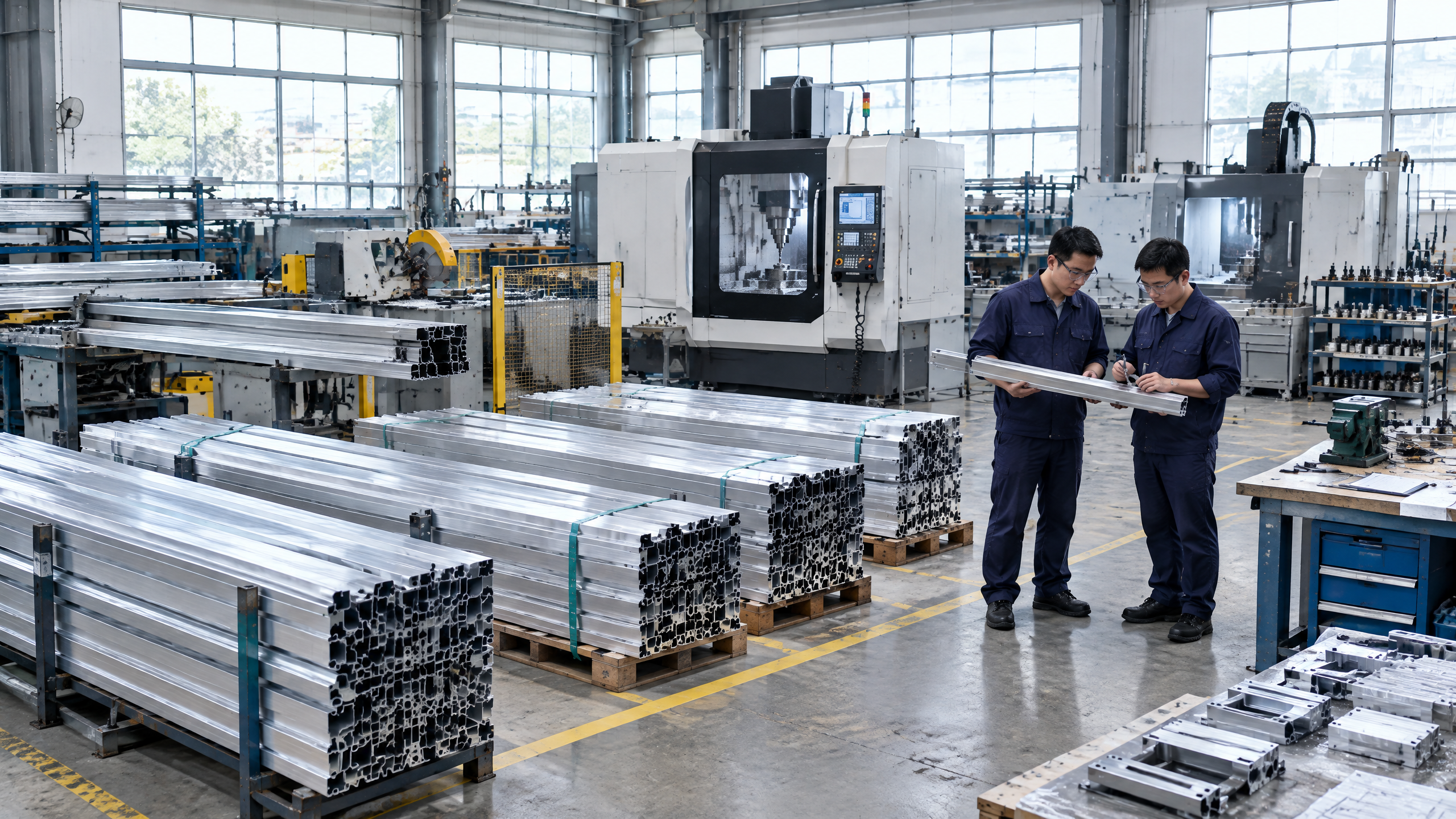
- Factory floor layout and photos showing jigs and fixtures relevant to your products.
- Production routing that identifies critical operations (cut, weld, assembly, finish).
- Typical production batch sizes and whether your order will be a dedicated run or combined with other projects.
- Evidence of a quality management system or documented procedures for nonconforming parts and corrective actions (a formal ISO certificate can be helpful but is not a substitute for project-specific evidence) [2].
Ask how the factory manages change control — for example, if a steel bracket detail is revised after delivery of initial parts, how does the supplier ensure field kits are updated and mis-matches are prevented?
Materials, surface treatments and corrosion lifecycle
Materials choices and finishing determine long-term performance. Confirm:
- Exact alloy designation (not generic terms). Mill test certificates should match purchase specifications.
- Surface treatment method and application parameters (e.g., chemical pre-treatment, coating thickness ranges, cure temperatures). Request representative test reports or inspection criteria.
- Details of sacrificial or protective coatings on fastening hardware or welded areas.
For galvanizing and treatment expectations, consult authoritative galvanizing guidance when specifying zinc coatings and related inspection points [1]. Do not accept vague terms such as “weather resistant” without measurable criteria.
Engineering, drawings and technical interfaces
A factory direct relationship must preserve engineering clarity:
- Define the deliverable set: preliminary layout, engineering inputs (site loads provided by buyer), production shop drawings, and final as-built records.
- Agree delivery milestones and revision windows. Require the factory to include versioned CAD/BIM exports compatible with your design workflow.
- Confirm who produces connection details between the carport and site structure (e.g., foundations, canopy-to-column anchors). The factory can produce connection plates but your engineer or a local installer must validate and design bolts, embedment depth and anchors.
Include a contractual clause obliging the supplier to submit drawings for buyer review and to track reviewer comments; this reduces misinterpretation at installation.
Logistics, Incoterms and cross-border handover
Clarify who manages which logistics leg by specifying Incoterms in the contract and confirming the factory’s normal export practices. A decision table helps:
| Logistics element | Factory responsibility under EXW | Factory responsibility under FOB / FCA | Buyer checks |
|---|---|---|---|
| Domestic packing to port | Minimal; buyer arranges transport | Factory organizes to named port/terminal | Carrier booking and export release |
| Customs export formalities | Buyer arranges | Factory arranges export clearance | Verify export documentation and export licences |
| Inland transport risk | Buyer | Factory until handover point | Insurance and claim contacts |
Refer to Incoterms guidance for proper allocation of responsibilities and risk transfer [3]. Also confirm customs documentation practices and whether the factory provides HS codes and value declarations for import clearance; follow your customs advisor for local import detail [4].
Commercial and contractual confirmations
Ask for explicit items in the commercial terms:
- A detailed, itemized quotation: part numbers, material quantities, unit rates and packing units. This is the basis for the "carport manufacturer project quotation" that you will use for internal approvals.
- Payment schedule and accepted instruments.
- Defined acceptance criteria and inspection holdpoints.
- Spare parts kits and parts ordering lead times, with contact points for “carport manufacturer technical support”.
Do not accept vague acceptance language. If you require performance of a certain finish or dimensional tolerance, put it in the contract.
Inspection, sample approvals and factory acceptance testing
Define and require factory acceptance tests (FAT) where relevant:
- Pre-production sample approvals for finishes and fit.
- First-article inspection reports for high-volume components.
- Dimensional checklists and photos for assemblies.
Decide on witness options: buyer-inspection, third-party inspector, or supplier-provided evidence with a cut-piece sample. For critical aspects such as weld quality, specify non-destructive testing or holdpoints.
On-site interfaces, installation and technical support
Factory responsibility commonly ends at delivery, but confirm technical support for installation:
- Named contact for installation clarifications and escalation channels.
- Availability of installation drawings and sequence information.
- How replacement parts are identified and shipped.
If you expect a factory to act as a “carport manufacturer oem partner” providing drawings, spares and assembly kits, document response times and what constitutes chargeable vs included support.
Note: local installers, engineers and authorities must make final site-specific decisions on anchors, foundations and code compliance.
Scope boundaries and what this guide does not promise
This guide focuses on what to confirm from a procurement and sourcing perspective. It does not promise or determine:
- Structural capacity numbers for any specific carport product.
- Permit approval or final building code compliance for your site.
- Exact lead times, final price, energy yield (for solar installations), or warranty terms.
- Acceptance of legal liability for design or installation.
Final, site-specific decisions must be made by qualified local professionals, permitting authorities, utility providers and certified installers. Carportiva or the factory can provide technical inputs and documentation but cannot substitute for local statutory approvals.
Decision table — factory-direct vs distributor/installer model
| Consideration | Factory-direct | Distributor / Local installer |
|---|---|---|
| Unit price | Potentially lower per unit | Usually higher but includes local services |
| Technical responsiveness | Single factory contact, can be remote | Local support and on-site presence |
| Customization control | High — factory can alter tooling | May be limited by distributor stock |
| Logistics complexity | Buyer must manage or coordinate export | Simpler, often domestic delivery |
| Risk allocation | Higher for buyer if not specified | Distributor may assume more responsibility |
Use this table to decide whether factory direct fits your procurement strategy and the level of in-country support you require.
Named buyer workflow — Six-step Factory-Direct Procurement
- Define requirements: scope, site loads (provided to factory), finish and interface assumptions.
- Pre-qualification: request factory capability evidence, QA procedures and contact references.
- Quotation & terms: obtain detailed carport manufacturer project quotation and confirm Incoterm and payment terms.
- Documentation & Approval: receive and approve shop drawings, samples and FAT arrangements.
- Production oversight: monitor key holdpoints, arrange inspections or third-party witness as required.
- Logistics & installation: confirm delivery documents, handover procedures and carport manufacturer technical support contacts for installation.
Follow this structured workflow to reduce ambiguity and make procurement auditable.
Mid-article CTA
Ready to begin a factory-direct inquiry? Submit project basics and site inputs via /inquiry or email info@carportiva.com and ask for an initial scope checklist.
Commercial negotiation points to lock in
- Exact material and finish names and acceptance criteria.
- Revision-controlled drawings included in contract scope.
- Defined spare parts kits and minimum stock lists for critical fasteners.
- Escalation path and technical contact for on-site clarifications.
- Packing inspection and documentation requirements for customs.
Ensure the purchase order references the approved drawing revision and includes penalty or remedy clauses for major non-conformances if your procurement policy requires them.
Integration with solar and fleet programs
If the carport includes PV or fleet shelter equipment, include electrical interface points, conduit chase locations and roof loads in initial scope documents. Work with your electrical EPC and the factory to confirm module clamps, cable trays and required penetrations. For system options see the Carportiva system range and consider reviewing other entries across all systems for compatibility.
Post-delivery support and lifecycle considerations
Confirm parts numbering and a recommended spares list for field maintenance. Ask the factory how they manage obsolete parts and whether a long-term spares program is available. Require that as-built drawings and punch lists are produced within a defined window after delivery.
Procurement checklist for final approval (decision table)
| Buyer approval item | Required before release to production | Evidence to store in project file |
|---|---|---|
| Approved shop drawings | Yes | Signed PDF with revision number |
| Material certificates | Yes | Mill certificates, batch numbers |
| Sample finish approval | If finish critical | Photo and approval record |
| Logistics plan | Yes | Incoterm, carrier, expected ETD/ETA |
| Inspection plan | Yes | Named inspector, holdpoints |
Store these documents in your project record to support quality claims and warranty processes.
Related sourcing terms
In project research, these connected terms should be reviewed against the same live brief: carport manufacturer b2b supplier, carport supplier b2b sourcing. They are search phrases, not separate technical guarantees.
Frequently asked questions
Q: What is the difference between factory acceptance testing and site acceptance testing? A: Factory acceptance tests (FAT) verify the assembly and fabrication quality at the factory before shipping; site acceptance tests verify the installation and interface performance after erection and connection.
Q: Can the factory be held responsible for local permit rejection? A: No. Responsibility for permit approvals lies with the party that applies to the local authority. The factory can supply required documentation, but local authorities and your design engineer determine approval.
Q: How do I manage customs and import compliance for factory direct shipments? A: Define the Incoterm, request full export documentation from the factory, and engage local customs brokers. See the authoritative importer guidance for general procedures [4].
Q: Should I insist on third-party inspection? A: For project-critical components or large-volume orders, a third-party inspector reduces risk and provides independent acceptance evidence.
Q: Where do I find product options? A: Review the Carportiva system range, consult all systems for compatibility, and read our sourcing guides for procurement templates.
Conclusion
A factory-direct procurement can deliver strong value but requires disciplined confirmation across manufacturing capability, materials traceability, engineering deliverables, inspection plans and logistics responsibilities. Use a documented workflow, insist on verifiable evidence and lock critical technical and commercial terms into the contract. Remember that final structural design, permit approvals and site acceptance are decided by local qualified professionals and authorities. For project-specific inquiries, submit project basics via /inquiry or email info@carportiva.com.
References
- American Galvanizers Association: https://galvanizeit.org/
- International Organization for Standardization: https://www.iso.org/
- International Chamber of Commerce Incoterms: https://iccwbo.org/business-solutions/incoterms-rules/
- U.S. Customs and Border Protection import guidance: https://www.cbp.gov/trade/basic-import-export
Keep the project brief connected.
Bring the actual project brief to the engineering table.
Share your location, layout, target application and available technical inputs. Carportiva can help identify the relevant product-interface information before a project-specific commercial discussion.
Request a project discussion