Direct answer (120–180 words)
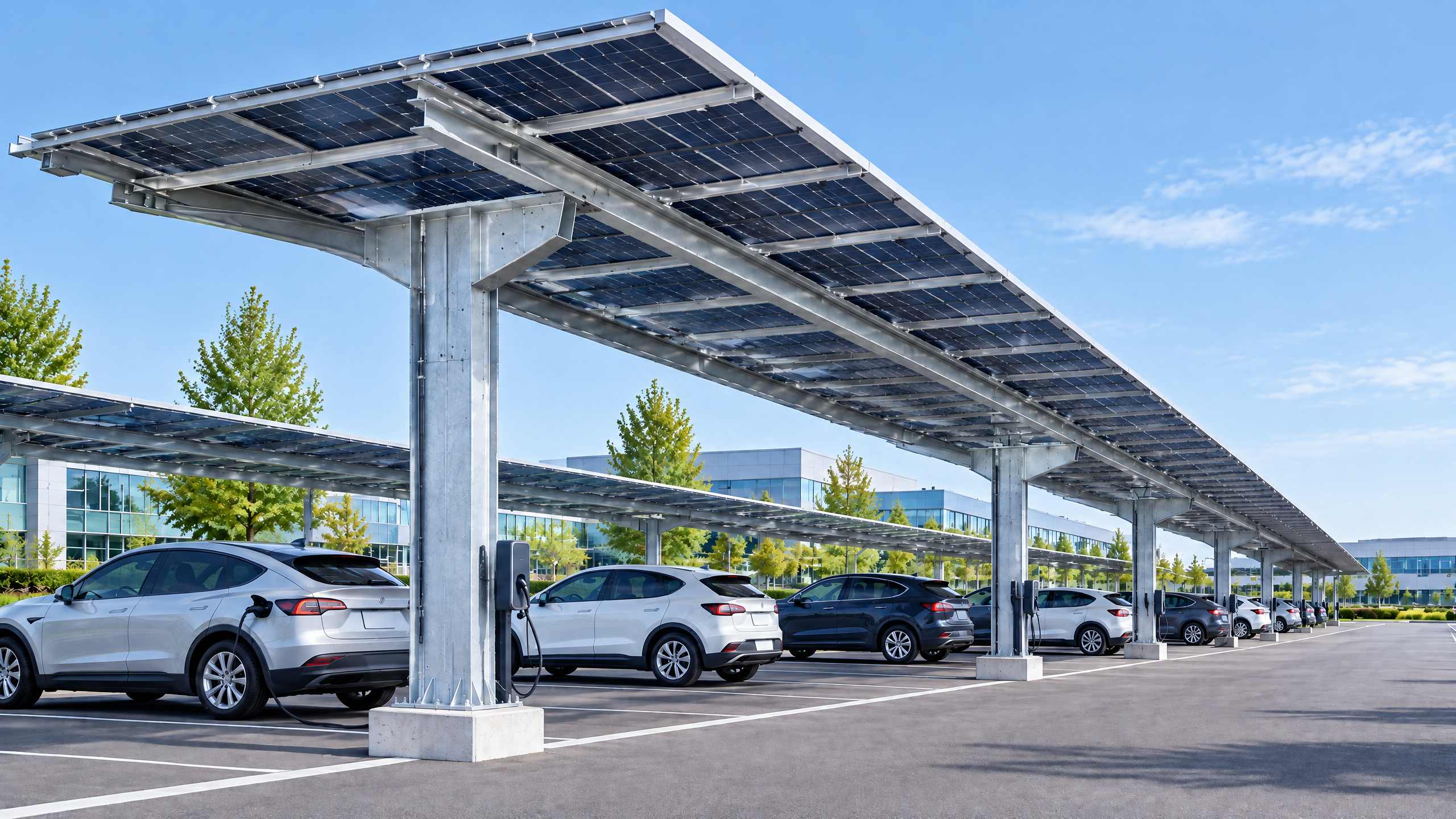
Solar carport battery site safety must be treated as a project-defining constraint rather than an afterthought. For commercial carports that host battery energy storage, safety links structural capacity, electrical routing, fire and thermal management, access for operations, and utility/permit outcomes into a single coordinated procurement and delivery plan. Buyers should adopt a risk-based hierarchy (avoid, protect, detect, respond, recover), confirm site constraints with geotechnical and structural analysis, and validate all electrical and interconnection assumptions with the utility and qualified engineers. Procurement must require factory evidence (FAT, material traceability, QC records), design-level integration reviews for the solar carport structural interface, and clear maintenance access planning. Decisions on battery technology, enclosures, and suppression are technical but must be contractually enforced as part of commercial solar procurement and commissioning. Site-specific capacity, permits, energy yield and warranty require a documented project basis and qualified local professionals, installers, utilities and authorities.
Buyer context and scope boundary
Audience
- Distributors, architects, contractors, developers, solar EPCs, fleet operators and procurement teams evaluating commercial solar carports with integrated battery storage.
- Global scope: standards, permit processes and utility rules vary; this guide focuses on common technical and procurement controls rather than jurisdictional legal requirements.
Scope
- Primary topic: solar carport battery site safety — the intersection of battery energy storage systems (BESS) and carport-mounted photovoltaic (PV) infrastructure.
- Secondary: impacts on structural design, PV equipment coordination, electrical pathway planning, operations and procurement.
- Exclusions: local code interpretation, contract templates, and jurisdiction-specific approvals — these require local counsel and authorities.
Boundary statement (important)
- Site-specific structural capacity, foundations, permits, electrical design, approvals, lead time, price, energy yield and warranty require a documented project basis and relevant local qualified professionals, installers, utilities and authorities. This guide provides a procurement and technical decision framework, not a substitute for detailed engineering or permitting.
Why safety-first procurement matters
- When batteries are colocated with vehicle shelters and rooftop PV, safety interdependencies multiply: mechanical loads change, fault currents and DC runs shift, thermal events can affect nearby assets, and maintenance routines must accommodate both PV and BESS. Align procurement to eliminate surprises and transfer responsibility for critical interface design.
Core decision principle: adopt a risk-based integration hierarchy
A concise procurement principle:
- Avoid creating new hazards where feasible (e.g., locate batteries off principal circulation).
- Reduce likelihood (selection of proven enclosures, segregation, robust structural interface).
- Detect early (sensors, BMS telemetry, gas and thermal detection).
- Respond effectively (fire suppression, isolation, safe shut-down).
- Recover and restore (clear maintenance procedures, replacement logistics, warranty).
Key decision criteria to weigh
- Structural capacity and load path for additional battery and enclosure weight (dead and live loads).
- Fire risk envelope and separation distances between batteries, PV strings and vehicle spaces.
- Electrical clearances, DC routing and earthing/grounding integrity.
- Access for maintenance, emergency services and plant replacement.
- Interactions with vehicle usage patterns and EV charging infrastructure.
- Supply chain, lead time and factory verification evidence.
In procurement, require bidders to present a traceable mapping from these criteria to product specifications, tests, and factory documentation.
Planning inputs: what you must gather before procurement
Minimum planning deliverables to obtain and validate
- Site topography, property boundaries, vehicle circulation and clear zones.
- Geotechnical report for foundation design and allowable bearing capacities.
- Existing as-built structural drawings of the carport if retrofitting.
- Local codes and fire department guidance for battery installations.
- Preliminary electrical single-line diagrams and expected export/import profiles.
- Utility interconnection requirements and any queue status or study needs.
- Energy yield estimate and load profile for usage (use PVWatts or equivalent for preliminary solar yield modeling) [2].
- Operational use case: fleet charging schedules, peak shaving, resiliency expectations.
- Environmental exposure data: wind, snow, flood zones (NREL resources can guide irradiance and PV considerations) [1].
- Project schedule constraints, procurement windows and lead-time buffers.
Stakeholder coordination checklist
- Owner/asset manager: operational needs and risk appetite.
- Structural engineer: carport capacity, load paths.
- Electrical engineer/EPC: interconnection, electrical pathway planning, short-circuit and protection studies.
- Fire authority / AHJ (authority having jurisdiction): fire suppression and access.
- Utility: interconnection and metering requirements (see interconnection resources) [4].
- Installer and logistics: site access for large deliveries and crane lifts.
Note: early engagement with utilities and AHJs reduces rework risk and schedule slippage.
Technical specifications and interfaces
Overview This section outlines technical interface areas that must be defined in procurement and verified by factory and site acceptance testing. Each interface should have a responsible party, design standard, and acceptance criteria.
1) Structural interface and foundations
- Define the solar carport structural interface: attachment points, load transfer routes, dynamic loads, uplift, and wind/snow load combinations. The term solar carport structural interface should appear in technical drawings and be part of vendor scope where applicable.
- For roof-mounted batteries or top-of-canopy enclosures, confirm carport member capacity; for ground-mounted battery enclosures attached to carport, define foundation design and seismic/soil interaction.
2) Electrical pathway planning
- Electrical pathway planning must specify DC combiner locations, inverter and battery placement, conduit routes, cable tray clearances, separation between DC and AC runs, and segregation from pedestrian/vehicle zones.
- The procurement specification should require cable schedules, derating factors, and short-circuit current ratings to be shown and validated.
3) PV equipment coordination
- PV equipment coordination covers module mounting, stringing strategy, inverter/BESS siting and wire runs to minimize DC voltage runs near battery enclosures. Require coordinated shop drawings that show PV equipment coordination with battery enclosures and cable trays.
4) Battery system and enclosure specifics
- Battery chemistry and cell form factor (e.g., lithium-ion pouch, prismatic, or alternative chemistries) must be agreed for thermal and containment strategy.
- Enclosure ratings: IP, IK, thermal insulation, and ingress barriers. Specify thermal runaway management features (venting channels, thermal barriers).
- BMS and safety functions: cell monitoring, SOC limits, isolation, fault logging, and external alarm contacts.
5) Fire, ventilation and suppression
- Define ventilation paths and passive/active ventilation strategies. Consider catalytic or gas sensors where applicable.
- Fire suppression: define requirements only where local codes or AHJ require them — procurement should stipulate that the system must meet AHJ-accepted suppression or mitigation strategies. Do not assume the same system is acceptable in all jurisdictions.
6) Earthing, bonding and lightning protection
- Bonding between carport structure, battery enclosures and PV mounting systems must be specified to prevent potential differences and ensure safe fault clearing.
- Lightning protection and surge protection strategies should be coordinated with PV arrays and battery system manufacturers.
7) Access and egress
- Maintenance access planning must specify clearances for removal of battery modules, inverter access, cable routing, and emergency egress for technicians and first responders. Include vehicle movement and parking considerations.
Decision table: Battery siting options (high-level)
| Siting option | Typical pros | Typical cons | Primary procurement control |
|---|---|---|---|
| Ground-mounted separate enclosure adjacent to carport | Easier ventilation, service access, lower heat transfer to PV | Requires dedicated foundations, footprint and security measures | Require foundation drawings, enclosure anchor details, and anti-tamper / access controls |
| Integrated under-canopy enclosure | Saves site footprint, proximity to PV and inverter | More complex thermal, structural and fire interfaces with carport | Specify solar carport structural interface, ventilation and separation |
| Roof-top enclosure (on canopy) | Short cable runs, consolidated footprint | Additional structural loads, access difficulty, potential thermal accumulation | Structural reinforcement drawings, rated lifting points, fall protection in procurement |
Decision table: Fire mitigation measures (selection depends on AHJ)
| Measure | Function | When to require in procurement |
|---|---|---|
| Passive separation (distance, fire walls) | Reduces thermal propagation | Where vehicle/fire codes require standoff or where ventilation limited |
| Active suppression (water mist, gaseous, aerosol) | Suppresses thermal events | Only if AHJ mandates or system risk assessment justifies |
| Automatic isolation and shut-down via BMS | Limits electrical contributions to events | Always require as part of BMS scope |
| Thermal runaway venting channels | Directs hot gases away from sensitive areas | For enclosed batteries with non-sealed vent scenarios |
Note: Do not assume the availability of a specific suppression method. Procurement should require AHJ concurrence or proof of equivalence.
Procurement evidence and factory acceptance requirements
What to require from suppliers (must-have evidence)
- Product specification sheets and test reports from accredited labs for electrical components (where applicable).
- Factory Acceptance Test (FAT) procedures and witness plan — include checklists for mechanical, electrical, communications and BMS verification.
- Material traceability records and Bills of Materials (BOM) for critical components (cells, modules, inverters).
- QA/QC procedures: inspection plans, non-conformance reporting, corrective action process.
- Shipping and lifting points documentation; packaging protection for on-site handling.
- Warranty terms with clear coverage boundaries and excluded causes.
- Spare parts lists and recommended lifespan/refresh intervals.
Supplier due-diligence checklist (decision table)
| Evidence type | Purpose | Minimum buyer requirement |
|---|---|---|
| Company credentials & references | Assess experience and financial viability | Provide three reference projects of comparable scale (do not accept unverifiable claims) |
| FAT report with witness log | Confirm product meets spec before shipment | Buyer or third-party witness optional; require full FAT packet before release |
| BMS integration tests | Confirm alarms, interlocks, and communication | Demonstrate BMS integration with site SCADA or monitoring platform |
| Transport & handling plan | Prevent damage in logistic phase | Confirm heavy-lift requirements, on-site crane needs, and slinging points |
| Traceability & serial control | For recall or defect management | Single-source BOM with serial numbers recorded in O&M handover |
Commercial solar procurement controls
- Contractually require suppliers to keep design responsibility for specific interfaces (clearly enumerated), or for the EPC to accept that responsibility.
- Define acceptance criteria: pre-shipment FAT, site acceptance test (SAT), and a provisional acceptance period tied to performance and defect corrections.
- Stagger payment milestones to FAT completion, delivery, SAT and final handover.
Factory audit focus areas
- Welding quality and structural attachment methods (for aluminium carport interfaces).
- Coating and corrosion control for coastal or corrosive environments.
- Electrical terminations, torque settings, labeling and conductor sizing.
- Software and firmware version control for BMS and inverter control systems.
Procurement clauses to consider
- Change control: explicit process and cost/responsibility allocation for late design changes.
- Lead-time acceptance windows and penalties for critical path items.
- Spare parts and critical consumables stocked or available within a contractually agreed timeframe.
Site installation, commissioning and operations
Installation sequencing highlights
- Foundations and anchoring: complete prior to delivery of heavy enclosures. Confirm geotechnical and foundation drawings.
- Structural fit-out: install carport canopies and ensure attachment points are confirmed against as-built tolerances.
- Enclosure placement and anchoring: verify level, anchorage torque and bonding points.
- Cable routing and segregation: implement approved electrical pathway planning routes and conduit runs.
- Pre-commissioning checks: insulation resistance (where applicable), loop and continuity checks, torque checks, and mechanical integrity.
- BMS and control integration: connect communications, verify alarm pathways, and simulate faults where safe and permitted.
- SAT and energization: perform SAT with documented checklist and stakeholders present; coordinate meter and protection settings with utility if grid-connected.
Operation & maintenance (O&M) essentials
- Define maintenance access planning for routine inspection, module cleaning, battery module replacement and inverter servicing.
- Access routes must allow removal of the largest replaceable component without extensive disassembly of the carport or PV array.
- Develop emergency response procedures covering battery thermal events, spill containment (if applicable), and coordination with local fire and rescue.
- Telemetry and alarms: specify minimum remote monitoring metrics (SOC, cell temperatures, pack faults, BMS alarms, inverter alarms, AC side measurements).
- Training and competency: stipulate supplier-provided operational training and maintain training records for on-site staff.
Commissioning acceptance criteria
- Documented SAT checklist that covers mechanical fixtures, electrical protections, BMS functionality, communications and safety interlocks.
- Performance verification against expected energy yield estimates using accepted modeling tools (e.g., PVWatts for PV yield) [2].
- Clear pass/fail criteria and remedial action processes.
Mid-article CTA If you would like project-specific guidance or to discuss integration options with our systems, contact our project team: /inquiry or info@carportiva.com. See SolarGrid commercial solar system, our overview of all systems, and practical sourcing guides for procurement templates.
Implementation risks and mitigations
Major implementation risks
- Structural overload and unanticipated reinforcement costs: mitigate by early structural review and defined acceptance limits in procurement.
- Fire and thermal propagation: mitigate with separation, robust BMS, and agreed AHJ-approved suppression or passive defenses.
- Electrical safety failures: mitigation through third-party protection studies, cable derating verification, and strict installation QA.
- Permit delays and utility interconnection hold-ups: mitigate by early utility engagement and inclusion of interconnection milestones in the schedule.
- Supply chain and lead-time variability: require lead-time commitments, staged procurement of long-lead items and clarity on contingent liabilities.
- Warranty and spare parts gaps: require warranty matrices and spare parts lead-time guarantees.
- Operational disruption to fleet usage: staging installation to avoid peak operational periods and ensure redundancy if a portion of charging capability is offline.
Risk allocation table (who typically owns which risk)
| Risk | Typical owner | Recommended contractual control |
|---|---|---|
| Site unknowns (soil, as-built differences) | Owner / developer | Owner-provided geotech and as-built; change control for surprises |
| Structural capacity shortfall | Structural engineer & EPC | Early structural report; supplier to propose modifications with cost/time estimates |
| AHJ permit rejections | Owner with EPC support | Early AHJ engagement; conditional acceptance based on AHJ feedback |
| Supplier technical non-conformance | Supplier | Warranty, remediation obligations, FAT/SAT conditions |
| Utility interconnection issues | Owner | Utility application and studies early; interconnection milestones in schedule |
Insurance and emergency planning
- Confirm that local insurance markets recognize BESS in carport applications and that premiums and conditions are accounted for by the owner.
- Maintain an emergency contact list and clearly posted site instructions for first responders.
Six-step buyer workflow (named and actionable)
Buyer workflow — "SAFE-SITE" six-step process
- Scope & risk profile (S)
- Define operational requirements: resilience, peak-shaving, EV charge profile and budget.
- Establish risk appetite and separation requirements for battery siting in relation to vehicle spaces.
- Analyze & survey (A)
- Commission geotechnical and structural surveys, as-built captures, and energy modeling (PVWatts can be used for yield inputs) [2].
- Obtain early utility and AHJ feedback.
- Framework design & interface mapping (F)
- Produce concept-level structural and electrical interface drawings that show solar carport structural interface, PV equipment coordination and electrical pathway planning.
- Run preliminary protection and short-circuit studies.
- Execute procurement (E)
- Issue procurement documents with mandatory FAT, traceability and maintenance access planning.
- Require supplier evidence pack and staged deliveries aligned to installation windows.
- Site installation & testing (S)
- Follow the installation sequencing above; require witnessed FAT/SAT and sign-off by the responsible disciplines.
- Validate telemetry and operational alarms; conduct simulated emergency drills.
- Transfer & operations (T)
- Handover O&M manuals, spare parts lists, and training.
- Confirm warranty activation and spare part stocking strategy.
For each step, require named responsible parties, acceptance criteria and a holding point for resolution. Integrate this workflow into procurement schedules and contracts.
Related B2B sourcing terms
For the same project brief, buyers may also encounter these connected search terms: utility and permit interface. They must be interpreted against the actual project scope rather than treated as independent technical guarantees.
Frequently asked questions (FAQ)
Q: How does solar carport battery site safety affect carport design? A: It changes loadings (dead weight of enclosures), may require reinforced connections, and imposes ventilation and separation constraints. The solar carport structural interface must be resolved in early design phases to prevent costly retrofits.
Q: Can batteries be installed under existing carports? A: Potentially, but only after structural verification and a hazards assessment. Existing canopies may lack capacity, access or appropriate spacing; a documented project basis with structural engineer sign-off is required.
Q: What standards or tools help estimate PV output and inform battery sizing? A: PVWatts provides an approachable yield estimate for PV planning; NREL publishes PV resources that support system design and irradiance analysis [1][2]. Battery sizing should be informed by actual load profiles and fleet use cases.
Q: Who must be engaged for utility coordination? A: The local distribution utility or transmission provider as appropriate, and often a dedicated interconnection engineer. FERC provides interconnection resources for larger generator projects in the U.S. context; local rules vary by country and utility [4].
Q: What are essential items for site acceptance testing (SAT)? A: Mechanical anchorage verification, electrical insulation and continuity tests, protection relay settings verification, BMS fault simulations, and operational telemetry validation.
Q: How to manage maintenance access with minimal operational disruption? A: Plan for module or inverter removal paths that avoid blocking vehicle circulation. Schedule intrusive maintenance during off-peak hours and design enclosures for modular replacement.
Q: Are there common procurement pitfalls? A: Yes — lack of early structural verification, vague interface responsibilities, insufficient factory evidence requirements, and underestimated lead times for critical components.
Conclusion
Solar carport battery site safety sits at the intersection of structural engineering, electrical systems, fire safety, and operations planning. For B2B buyers in commercial solar procurement, treating safety as the primary procurement driver reduces rework, clarifies responsibilities, and secures predictable outcomes. The principles in this guide — risk-based decision-making, early stakeholder engagement, rigorous factory evidence, and defined acceptance criteria — form a practical framework for delivering safe, operable carport + BESS projects.
Remember: site-specific structural capacity, foundations, permits, electrical design, approvals, lead time, price, energy yield and warranty require a documented project basis and relevant local qualified professionals, installers, utilities and authorities. Use this guide to build procurement documents that require suppliers to own clearly defined interfaces and to provide verifiable evidence.
For help translating this framework into project-specific requirements or to review integration options, contact our project specialists: /inquiry or info@carportiva.com. Explore SolarGrid commercial solar system for system options, view all systems, and consult our sourcing guides for procurement templates and checklists.
References (selected)
- NREL PV resources for irradiance and PV research [1]
- PVWatts solar energy estimator [2]
- U.S. Department of Energy AFDC (for vehicle and charging context) [3]
- FERC interconnection resources (U.S. interconnection frameworks) [4]
References
- National Laboratory of the Rockies PV resources: https://www.nrel.gov/solar/
- PVWatts Calculator: https://pvwatts.nrel.gov/
- U.S. Department of Energy Alternative Fuels Data Center: https://afdc.energy.gov/
- Federal Energy Regulatory Commission interconnection resources: https://www.ferc.gov/electric-transmission/generator-interconnection
Keep the project brief connected.
Bring the actual project brief to the engineering table.
Share your location, layout, target application and available technical inputs. Carportiva can help identify the relevant product-interface information before a project-specific commercial discussion.
Request a project discussion