Direct answer (120–180 words) Confirming a solar carport manufacturer export supply package means verifying the complete chain from design drawings and factory capability through export packing, documentation and handover responsibilities. Key confirmations: verified structural and steelwork documentation, factory production capacity and quality systems, finished-surface protection and corrosion treatment instructions, a clear export packing plan sized for your freight, correct Incoterms and export paperwork, and defined inspection and acceptance points (factory, shipping, on-site). Also confirm supplier experience with industrial fleet installations and the availability of spare components and installation guidance. Do not assume local permitting, site geotechnical suitability, structural capacity, energy yield, code compliance, warranty scope, price or lead time—local qualified professionals, authorities, utility providers and installers must make final site-specific decisions. Use these confirmations as procurement decision triggers and record them in contract attachments and your carport supplier comparison checklist before award.
Why verify export supply rather than just buy a quote
Export supply for large carport projects is a combination product: structural aluminium or steelwork, electrical PV components (if solar), mechanical fixing systems, and logistics packaging sized for sea or air freight. Mistakes or gaps in documentation, packaging, or responsibilities typically show up as delays, higher landed cost, or installation rework. An early, structured confirmation mitigates these risks and clarifies who is accountable at each milestone.
Key confirmation areas
Confirm the following categories with the manufacturer and list agreed deliverables in the contract.
- Technical documentation: drawings, BOM, connection details and surface treatment schedules.
- Factory capability: production layout, capacity for your order size and quality-control processes.
- Export packing plan: how modules, frames and fasteners are packed, crate strength, and handling marks.
- Logistics and commercial terms: Incoterms, insurance, freight readiness and customs documentation.
- Testing and inspection: factory inspection points, acceptance criteria and any third-party tests.
- Aftercare: spare parts, replacement module lists and site assembly guidance.
Use this as the outline for an industrial carport manufacturer supplier evaluation.
Industrial carport manufacturer factory capability
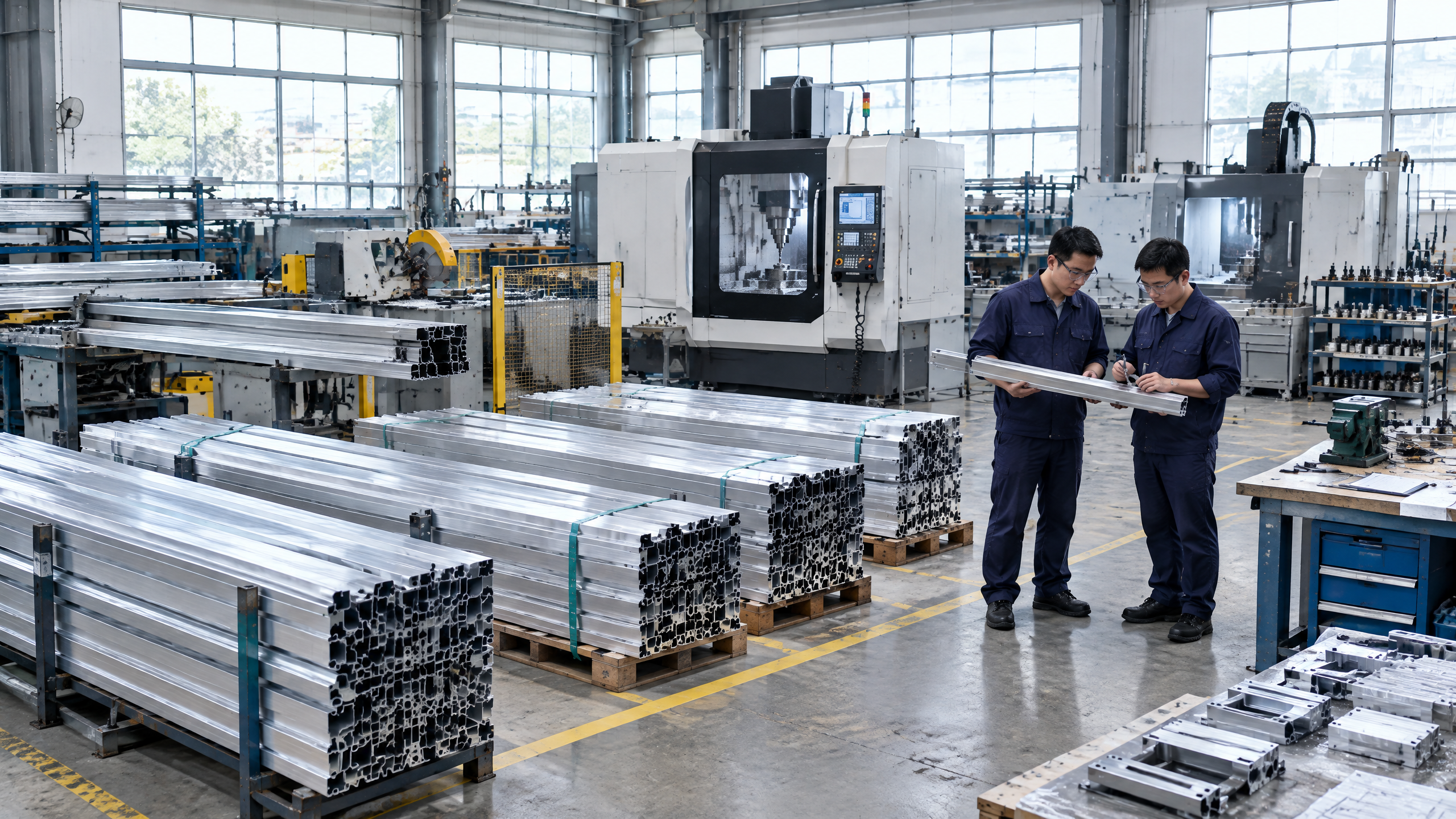
Ask for evidence of factory capability proportionate to project size: line drawings, capacity per month, plant equipment for aluminium extrusion or steelwork, and sample production flow for a typical carport module. Confirm whether the manufacturer operates an in-house powder-coating or anodizing line, or subcontracts surface treatment—this affects lead time and traceability. Request the quality management baseline (e.g., documented procedures or registrations) and inspect the factory’s traceability for raw material batches. For international trade and cross-border acceptance, compliance with recognised management systems is useful to confirm consistency and auditability [2].
Industrial carport manufacturer steelwork documentation
Obtain the steelwork and aluminium-work documentation set early: stamped fabrication drawings, connection and anchor details, bill of materials (BOM), and surface treatment specifications. The phrase industrial carport manufacturer steelwork documentation should appear in your technical annex and indicate who prepares stamped calculations (supplier or engineer) and who reviews them locally. Do not accept unsigned or incomplete structural documents; they are the basis for foundation design and local approvals.
Decision table: Documentation decision matrix
| Document | Why confirm | Acceptable minimum | Who signs off |
|---|---|---|---|
| Fabrication drawings | Basis for manufacture and site fit | Full-scale connection details and BOM | Manufacturer + Buyer Engineer |
| Anchor and foundation interface | Avoids site rework | Anchor plate dimensions, tolerance and embed depth | Buyer Engineer |
| Surface treatment spec | Corrosion life and finish | Type, thickness, test method | Manufacturer QA |
| Packing list & export packing | Freight sizing and handling | Itemised crate list + pack weights & dims | Manufacturer |
| Export commercial docs | Customs & title transfer | Commercial Invoice, Packing List, B/L or AWB, Certificate of Origin | Manufacturer |
Industrial carport manufacturer export packing and logistics
Export packing must protect finishes and allow safe handling. Confirm crate or container load plans, packing materials for module glass or aluminium extrusions, internal restraints, and external markings (handling marks, stack limits). Use a formal industrial carport manufacturer export packing plan as part of the contract. Confirm whether packing is designed for container stuffing, roro or breakbulk, and whether palletisation follows your forwarder’s specifications.
Logistics and commercial terms should be explicit. Agree Incoterms early and record which party is responsible for export clearance, freight booking, insurance during transit and final delivery documentation—these are standardised under Incoterms [3]. For imports, document what assistance the supplier will provide for customs clearance and which documents they will furnish; local import processes and duties differ by country, and customs guidance should be confirmed with the importer and authorities [4].
Decision table: Logistics and responsibilities
| Responsibility | Supplier confirms | Buyer confirms | Decision point |
|---|---|---|---|
| Incoterms & delivery point | e.g., FOB / FCA / DDP | Understands cost/risk shift | Contract clause |
| Export packing | Packing plan & photos | Accepts method or specifies changes | Pre-shipment sign-off |
| Freight booking | If supplier handles freight | Forwarder & ETA | Booking confirmation |
| Export docs | Commercial invoice, B/L, CO | Import licenses & clearance readiness | Document delivery before sailing |
| Insurance | Coverage for named perils | Additional local insurance | Policy copy exchanged |
Industrial carport manufacturer supplier evaluation
A structured supplier evaluation reduces negotiation friction. Evaluate technical fit, export experience, financial stability and references for industrial builds or fleet sites. Include a carport supplier comparison checklist in your tender evaluation pack and score suppliers on technical compliance, export competence, documentation completeness, and after-sales readiness. Where PV modules or inverters are included, confirm separate warranties and supplier responsibilities for electrical items.
Suggested scoring categories for supplier evaluation:
- Technical documentation completeness
- Factory capacity and lead-time realism
- Export packing and logistics experience
- After-sales parts availability and lead time
- Experience with industrial carport manufacturer fleet project deliveries
Industrial carport manufacturer fleet project considerations
Fleet projects typically require uniformity, fast assembly, and predictable delivery. Confirm module or shade bay repeatability, pre-kitted installation packs for each bay, and whether the supplier has completed prior industrial carport manufacturer fleet project exports. For fleets, spare-part kits per X bays and standardised installation sequences save labour at handover.
Inspection and acceptance checkpoints
Define inspection points and criteria:
- Raw material release (optional for large projects)
- First-piece fabrication and coating inspections
- Factory acceptance test (visual, dimensional checks)
- Pre-shipment inspection (packing and item count)
- On-site handover acceptance after erection
Record acceptance criteria per document and require photographic evidence for pre-shipment. For critical items, consider third‑party inspection at the factory.
Pricing, scheduling and what we will not promise here (scope boundaries)
This guide does not promise or determine structural capacity, permit approval, code compliance, lead time, price, energy yield or warranty terms. Those items require site-specific calculations, local authority approvals, contract negotiation and specialist input. Final decisions on structural adequacy, permitting, grid connections and installation sequencing must be made by local qualified professionals, authorities, utility providers and certified installers. Use documents provided by the manufacturer to inform, not replace, these site-specific approvals.
Buyer workflow: "Export-Ready Carport Procurement" (six steps)
- Project Brief and Requirements — compile functional requirements, site constraints and import rules.
- Industrial carport manufacturer supplier evaluation — issue an RFP using the carport supplier comparison checklist.
- Detailed Design & Documentation — agree fabrication drawings, industrial carport manufacturer steelwork documentation and acceptance criteria.
- Factory Review & Pre-shipment Inspection — confirm industrial carport manufacturer factory capability and perform FAI or third-party inspection.
- Export Packing & Logistics — confirm industrial carport manufacturer export packing plan, Incoterms and freight bookings.
- On-site Handover & Spare Parts — manage installation acceptance, spares supply and documentation transfer.
Mid-article CTA If you want checklist templates or to discuss a specific project, begin the conversation via our inquiry form at /inquiry or email our sourcing team at info@carportiva.com. You can also review the Carportiva system range and sourcing guides for related technical materials.
Contract clauses and commercial protections to include
- Deliverable list with document attachments (drawings, packing plan, test reports)
- Explicit Incoterms and named delivery point [3]
- Acceptance criteria at each inspection milestone
- Packing and labelling requirements for sea/air freight
- Spare-part list and agreed lead times
- Intellectual property and drawing ownership for as-built models
Practical on-site handover items
During handover, confirm:
- All crates match the shipping packing list and are undamaged
- Bolt packs and consumables are labelled and match the BOM
- Drawings used for assembly match delivered materials
- Installer receives contact for parts and rework
Carport supplier comparison checklist
- Technical drawings complete and stamped
- Export packing plan available
- Clear Incoterms and documentation responsibilities
- Evidence of industrial carport manufacturer factory capability
- Spare-parts per bay defined
- After-sales contact and response SLAs
Frequently asked questions
Q: Can this guide confirm whether a carport will meet local wind or snow codes? A: No. This guide tells you what to request from a supplier. Structural compliance requires site-specific calculations signed by a local structural engineer.
Q: Should I rely on the supplier to handle customs clearance? A: Only if your contract and Incoterms explicitly state that. Import responsibilities vary; confirm documentation and who pays duties or arranges clearance [3][4].
Q: How do I verify finish and corrosion protection? A: Request surface-treatment specifications, test certificates, and a description of the coating method. For galvanizing specifics consult specialist guidance [1].
Q: Do you provide a checklist for fleet deliveries? A: Yes—use the buyer workflow above and include pre-kitted installation packs and spare kits per set of bays. Contact /inquiry or info@carportiva.com for templates.
Q: What documentation should I attach to the purchase order? A: Attach stamped fabrication drawings, BOM, packing plan, agreed Incoterms, inspection criteria and acceptance sign-offs.
Conclusion
Confirming solar carport manufacturer export supply requires a structured approach: define required documentation, verify factory capability, agree packing and Incoterms, and record inspection and acceptance points. Use the named buyer workflow and the carport supplier comparison checklist to manage risk, and ensure your contract includes the documented deliverables. For project-specific templates and to discuss Carportiva systems, see the Carportiva system range, review our sourcing guides, or start an inquiry at /inquiry or info@carportiva.com.
References
- American Galvanizers Association: https://galvanizeit.org/
- International Organization for Standardization: https://www.iso.org/
- International Chamber of Commerce Incoterms: https://iccwbo.org/business-solutions/incoterms-rules/
- U.S. Customs and Border Protection import guidance: https://www.cbp.gov/trade/basic-import-export
Keep the project brief connected.
Bring the actual project brief to the engineering table.
Share your location, layout, target application and available technical inputs. Carportiva can help identify the relevant product-interface information before a project-specific commercial discussion.
Request a project discussion