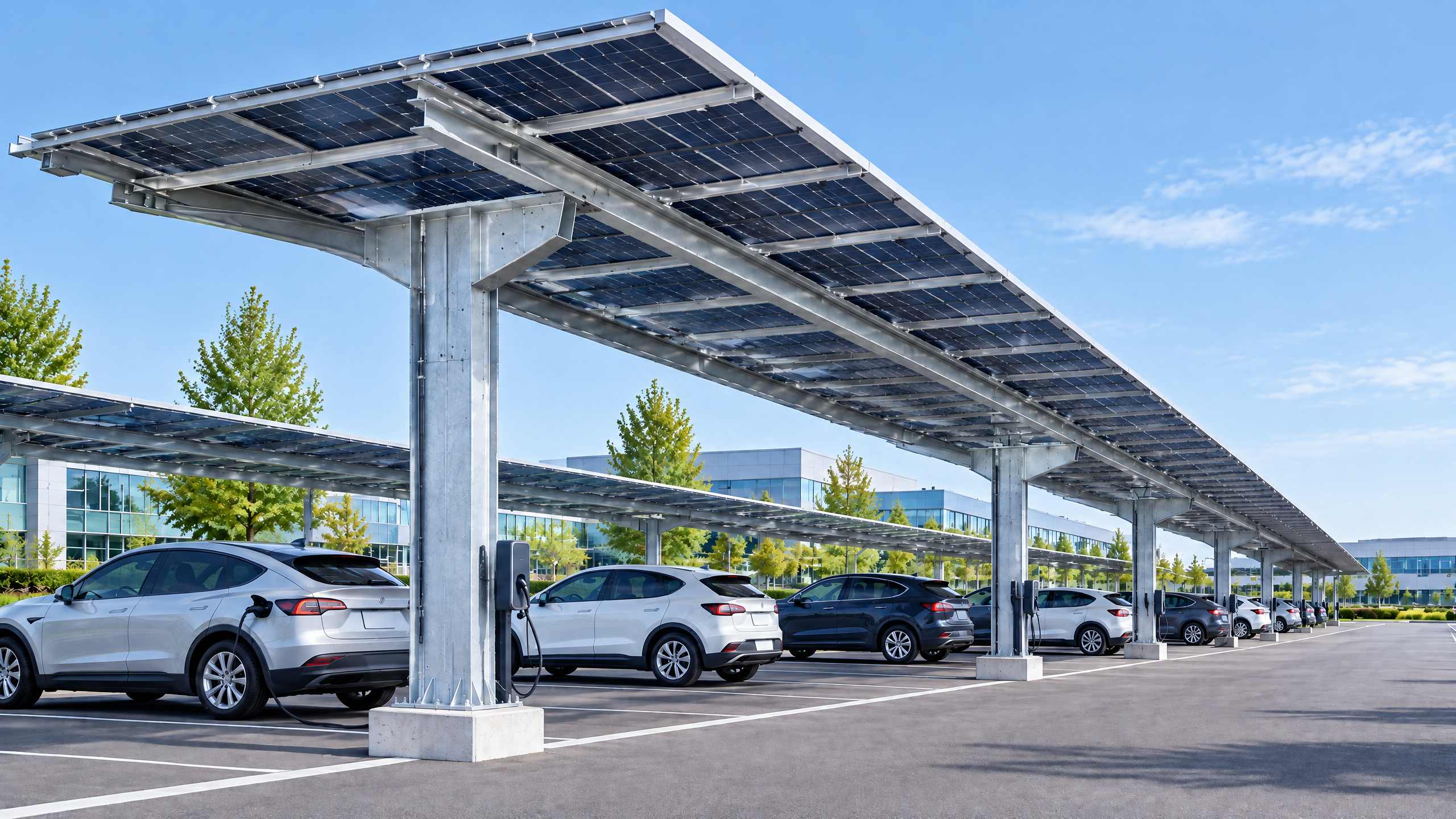
Direct answer — what to confirm (approx. 150 words)
For a reliable procurement decision, confirm that the solar carport foundation geotechnical review delivers a site-specific scope: clear subsurface data (borings, resistivity, groundwater), design parameters (allowable bearing pressures, design SPT/CA values, soil modulus, liquefaction assessment), and explicit recommendations for foundation type, depth, frost protection, and corrosion exposure. Verify the report includes drawings or coordinate data for the solar carport foundation anchor layout, uplift and lateral capacities for anchor options, and construction-phase constraints. Ensure the geotechnical scope is coordinated with structural and civil designers—documented as solar carport foundation civil coordination—and that deliverables support procurement and subcontractor scopes for foundation materials and installation. Confirm the report is signed and stamped by a licensed local geotechnical engineer and that it identifies site-specific risks that affect solar carport foundation construction readiness. Final site-specific decisions, permits and code acceptance remain with local authorities and qualified professionals.
Why the geotechnical review is a procurement-critical deliverable
A geotechnical review translates the ground conditions you will build on into actionable engineering parameters. For solar carports, which combine long-span steel or aluminium framing with concentrated point loads at column bases or anchors, the geotechnical conclusions directly influence foundation type, anchor sizing, excavation scope, and contractor bids. Without a clear geotechnical baseline you risk change orders, schedule delays, or mismatches between foundations delivered and foundations installed.
Key procurement outcomes that depend on the review:
- Accurate scope and pricing for civils, concrete, anchors and piling;
- Clear specifications for anchor product procurement and testing;
- Defined excavation, dewatering and traffic management requirements;
- Informed risk allocation for unusual subsurface conditions.
What the report must explicitly include
At minimum, your specification for the geotechnical review should require the following written and graphical deliverables:
- Location and logs of borings, CPTs, or other subsurface explorations;
- Groundwater observations and seasonal fluctuation guidance;
- Laboratory test summaries (Atterberg limits, grain size, UCS, where applicable);
- Design parameters: allowable bearing pressure, lateral earth pressure, modulus values, friction factors for anchors;
- Uplift and lateral capacity recommendations for proposed anchors or piles;
- Frost depth and frost heave mitigation recommendations;
- Corrosion and sulfate exposure classification for concrete and metals;
- Construction considerations: excavation slope, shoring, dewatering, and staging;
- Drawings or coordinate tables that allow direct transfer to civil and structural models.
Include the phrase "solar carport foundation geotechnical review" in your scope-of-work document so the consultant understands the deliverable is specifically for a carport/solar array foundation, not a general site report.
Decision table — Geotechnical deliverables vs buyer confirmation
| Geotechnical deliverable | What the buyer must confirm | Why it matters |
|---|---|---|
| Boring/CPT locations and depths | Confirm number, spacing and depth relative to column grid | Ensures report captures variability under each column and future expansion zones |
| Groundwater data & seasonal notes | Confirm monitoring duration or seasonal coverage | Affects dewatering, excavation sequencing and foundation design |
| Anchor uplift/lateral capacities | Confirm engineered capacities for specified anchor type | Determines anchor procurement and field testing needs |
| Corrosion and sulfate class | Confirm recommendations for material selection and concrete mix | Protects long-term durability and O&M costs |
| Construction risk notes | Confirm mitigation steps and contractor obligations | Reduces change order exposure during construction |
Site investigation scope and testing: what to specify
Ask for a scope that is matched to your procurement risks and the chosen foundation system:
- For shallow spread footings or slab foundations: require borings to at least 2× foundation depth and lab tests for bearing and compressibility.
- For driven piles or torque anchors: require dynamic/dilatometer data and driver/test recommendations.
- For heave-prone or high water table sites: include seasonal groundwater monitoring or standpipe piezometers.
Document the minimum acceptable methods (e.g., SPT, CPT) and minimum reporting detail in your tender documents. If a particular anchor or piling product is likely to be used, ask the geotechnical engineer to provide capacities specific to that family of products.
Foundation type and anchor layout: confirm drawings and coordinates
One frequent gap between geotechnical reports and procurement packages is missing layout-level coordinates. You should confirm the geotechnical deliverable includes a proposed solar carport foundation anchor layout keyed to the structural grid. The layout must identify column locations, anchor plate extents, and embedment elevations.
Decision table — Anchor layout options and procurement implications
| Anchor solution | Typical procurement confirmations | Pros/Cons for bidding |
|---|---|---|
| Cast-in-place concrete footings with anchor bolts | Confirm bolt embedment, concrete class, rebar schedule, anchorage tolerances | Familiar to concrete contractors; longer cure time |
| Torque/ground screws | Confirm torque vs capacity curves, testing requirement, installation tolerances | Rapid installation; may be sensitive to obstructions |
| Driven piles (steel or concrete) | Confirm hammer type, driving criteria, pile capacity testing | Good for soft soils; requires vibration/noise controls |
| Grouted rock anchors | Confirm bond length, grouting specs, access and drilling caveats | Useful for rock or dense soils; specialized installers required |
Specify the exact phrasing "solar carport foundation anchor layout" in coordinated deliverables so civil and structural teams can align tolerances and procurement scopes.
Civil coordination and utilities
Close interaction between geotechnical, civil, and structural teams prevents costly assumptions. Require a coordination exercise that documents conflicts and sequencing:
- Identify all known and suspected underground utilities and include utility pot-hole or vacuum-excavation data where anchors will be installed.
- Require the geotechnical engineer to annotate utility conflict zones and recommended offsets.
- Require a formal sign-off step: the geotechnical engineer, civil engineer and structural lead must document that they reviewed the anchor layout and construction sequence — label this element as solar carport foundation civil coordination in project documentation.
Also confirm surface drainage grading, stormwater controls, and paving assumptions that will affect foundation depth and excavation limits.
Construction readiness: prepare for site handover
To minimise delays and variations, the geotechnical deliverable must enable contractors to bid and mobilise with confidence. Confirm the report supports solar carport foundation construction readiness by providing:
- Foundation and anchor coordinates that transfer to contractor staking;
- Material specifications and testing frequencies for concrete, grout, and anchors;
- Field testing protocols (e.g., pull-out tests, torque tests, pile load tests) and when they must be performed;
- Temporary works considerations, such as shoring or traffic protection.
Make construction readiness a pass/fail item in your procurement checklist so the civil subcontractor can confirm readiness before mobilising.
Mid-article CTA
Ready to convert geotechnical data into a clear procurement package? Start an inquiry now: /inquiry or email info@carportiva.com to request our template scope for a solar carport geotechnical review.
Documentation, inspection and operations handover
Operational reliability begins at design. Require the following items be produced and transferred at project close:
- As-built drawings of foundations and anchors;
- Test and inspection records for all foundation works;
- A solar carport operations inspection checklist for recurring structural inspections;
- A solar carport operations monitoring handover package containing baseline performance and structural condition notes;
- A solar carport operations maintenance plan specifying inspection intervals, maintenance tasks for anchor plugs, drainage, and protective coatings.
Using these deliverables reduces disputes over latent defects and creates a clear pathway for lifecycle maintenance. Explicitly reference "solar carport operations maintenance plan", "solar carport operations monitoring handover", and "solar carport operations inspection checklist" in your contract’s handover requirements so responsibilities are unambiguous.
Procurement checklist for buyers
Use this checklist to prepare tender documents and evaluate bids:
- Scope: Include "solar carport foundation geotechnical review" and list minimum deliverables.
- Layout: Require "solar carport foundation anchor layout" with coordinates.
- Coordination: Require documented "solar carport foundation civil coordination" meetings and sign-offs.
- Readiness: Confirm "solar carport foundation construction readiness" items are present.
- Testing: Specify field test types and acceptance criteria.
- Handover: Specify "solar carport operations maintenance plan", monitoring handover and inspection checklist items.
Five-step buyer workflow (named)
- Define Ground Requirements — Issue a technical brief that names "solar carport foundation geotechnical review" and states expected foundation types and grid coordinates.
- Procure Geotechnical Scope — Engage a local licensed geotechnical engineer with the brief and require the deliverables checklist.
- Coordinate Design — Run a formal "civil–structural–geotechnical coordination" session and document outcomes as "solar carport foundation civil coordination".
- Finalise Construction Pack — Convert the geotechnical report into a construction-ready package that demonstrates "solar carport foundation construction readiness" (drawings, material specs, testing).
- Operate & Handover — Ensure as-builts, test records and the "solar carport operations maintenance plan", "solar carport operations monitoring handover" and "solar carport operations inspection checklist" are delivered and accepted.
Sourcing and product considerations
When you move from geotechnical data to vendor selection, consider product families and supplier capabilities rather than unit cost alone. Carport foundations for aluminium framing and commercial PV modules are sensitive to installation tolerances and corrosion environments. Coordinate procurement with your selected carport system — for example, reference SolarGrid commercial solar system or browse all systems to ensure foundation anchorage matches canopy dimensions and attachment methods. Carportiva’s sourcing guides include procurement templates you can adapt for local conditions.
Risk allocation and who signs off
Make sure contracts name the parties responsible for geotechnical assumptions, post-bid site investigations, and change-order allocation. Require that the geotechnical report be signed and sealed by a licensed local geotechnical engineer; however, clarify that final structural capacity approval, permit acceptance and construction acceptance are the responsibilities of the structural engineer of record, local authorities and the installer. The buyer should not interpret the report alone as permit approval or warranty of performance.
Scope boundaries — what this review does not promise
This guide and a geotechnical review do not, on their own:
- Guarantee structural capacity or approve the structural design;
- Provide permit approval or code compliance acceptance;
- Confirm lead time, price, energy yield, or warranty terms;
- Replace local site-specific judgement by licensed professionals, authorities, utility providers or installers.
State these exclusions in tender documents so bidders understand the limits of the geotechnical deliverable.
FAQ
Q: How many borings are enough for a typical multi-bay carport? A: It depends on span, soil variability and risk tolerance. Specify a minimum and allow bidders to recommend additional borings based on preliminary findings. Local regulations and the geotechnical engineer determine final spacing.
Q: Should we require anchor testing during installation? A: Yes. Field tests (pull-out, torque or pile load tests) must be specified in the geotechnical report and enforced in the construction QA plan.
Q: When should civil and structural teams coordinate relative to permitting? A: Before permit submission. Documented "solar carport foundation civil coordination" helps ensure permit drawings match the geotechnical assumptions.
Q: Can we use the geotechnical report for other structures on site? A: Use the report only for the scope it covers. If other structures fall outside the carport grid, additional investigation may be necessary.
Q: Who accepts the operations handover package? A: The asset owner or their authorised O&M representative should accept the handover. The package must include the agreed "solar carport operations maintenance plan", "solar carport operations monitoring handover" and "solar carport operations inspection checklist".
Conclusion
A focused solar carport foundation geotechnical review reduces procurement ambiguity and supports accurate bids, safer construction and clearer operations handover. Insist on layout-level coordinates, anchor capacities, test protocols and documented coordination with civil and structural teams. Require that the geotechnical deliverables explicitly enable "solar carport foundation construction readiness" and the subsequent operations documentation. For templates, system alignment and procurement assistance, consult the SolarGrid commercial solar system, review all systems, and adapt our sourcing guides. To discuss a site-specific scope or request our geotechnical SOW template, start an inquiry: /inquiry or email info@carportiva.com.
References
- National Laboratory of the Rockies PV resources: https://www.nrel.gov/solar/
- PVWatts Calculator: https://pvwatts.nrel.gov/
- U.S. Department of Energy Alternative Fuels Data Center: https://afdc.energy.gov/
- Federal Energy Regulatory Commission interconnection resources: https://www.ferc.gov/electric-transmission/generator-interconnection
Keep the project brief connected.
Bring the actual project brief to the engineering table.
Share your location, layout, target application and available technical inputs. Carportiva can help identify the relevant product-interface information before a project-specific commercial discussion.
Request a project discussion