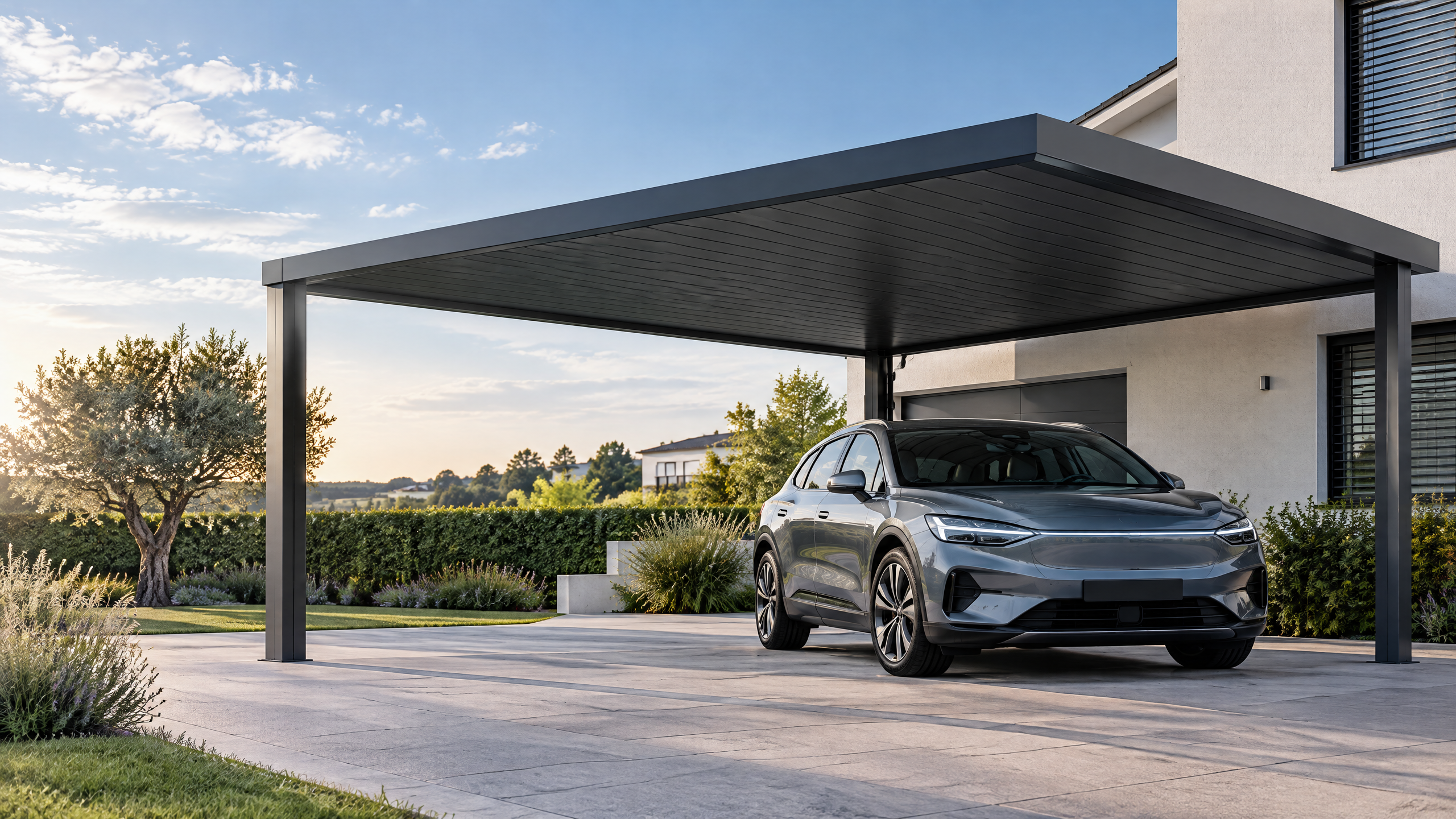
Direct answer (120–180 words) Specifying aluminium carport customisation RAL finish requires treating colour and coating as an engineered system component, not a decorative afterthought. Successful specification aligns the chosen RAL colour and coating system with site environment, expected service life, alloy and anodic behaviour, fastening and drainage details, solar PV interfaces, and procurement evidence. At tender stage, define performance targets (corrosion category, gloss, adhesion, colour tolerance), required pre-treatment, and acceptable fastener materials; require factory mock-ups and final shop drawing review to close interfaces. Coordinate finish requirements with aluminium profile selection, roof drainage coordination and electrical/solar design so that the finish does not conflict with mounting plates, sealants or drainage paths. Contractual acceptance should hinge on documented factory QA, samples and installation readiness checks. For project-specific structural, permit, electrical, lead time, price, energy yield and warranty matters, engage local qualified professionals and document decisions on a project basis.
Buyer context and scope boundary
Purpose and audience This guide is written for global B2B buyers — distributors, architects, contractors, developers, solar EPCs and fleet operators — who specify, procure or integrate architectural aluminium carports, commercial solar carports and industrial/fleet vehicle shelters. It focuses on aluminium carport customisation RAL finish and the procurement, technical and implementation implications of specifying colour and coating on commercial projects.
Scope boundary
- Included: specification of aluminium coatings and RAL colour selection as part of a comprehensive architectural carport specification; coordination with structural design, aluminium profile selection, roof drainage coordination, fasteners and PV integration; procurement evidence and shop drawing review; pre-delivery quality checks and installation readiness actions.
- Excluded: site-specific structural capacity calculations, foundation design, local permit approvals, utility interconnections, detailed electrical PV design and final warranty negotiation. These require a documented project basis and appropriately qualified local professionals, installers, utilities and authorities.
Terminology
- RAL: a commercially established colour reference system used widely in architecture and industry.
- Coating system: entire surface treatment (pre-treatment, primer, topcoat, cure) specified for aluminium.
- Architectural aluminium systems: engineered aluminium components for buildings and carports; see NordArch architectural aluminium system and all systems.
Core decision principle
Make the finish a system decision, not a colour decision The core principle for aluminium carport customisation RAL finish is to treat finish selection as an integrated system decision that balances aesthetics, durability, compatibility and lifecycle cost. Colour choice (RAL) should be driven by performance requirements and interface compatibility as much as visual intent.
Key objective alignment
- Visual: consistent, durable colour appearance across profiles, flashings and attachments.
- Durability: coating system selected for the site corrosivity and UV exposure.
- Compatibility: finish and fastener compatibility to prevent galvanic corrosion and staining.
- Constructability: finishes that permit shop prefabrication, factory testing and simple installation without on-site repainting.
- Risk management: clear acceptance criteria, mock-ups and documentary evidence to reduce rework and disputes.
Why this matters commercially Poorly specified finishes increase risk of colour mismatch, premature failure, warranty claims and unplanned maintenance. Conversely, a disciplined specification reduces whole-life cost and streamlines procurement, factory acceptance, and on-site installation readiness.
Planning inputs — what you must gather before specifying finish
Project information checklist Collect the following inputs before writing finish requirements:
- Project basis: scope drawings, elevations, critical dimensions, and bill of materials.
- Environmental exposure: coastal proximity, industrial atmosphere, de-icing salts, UV index and pollution; use this to determine corrosion category.
- Expected service life and maintenance regime: planned replacement cycles and access for maintenance.
- Adjacent materials and interfaces: concrete, steelwork, PV modules, sealants, glazing and canopy membranes.
- Rainwater and drainage paths: location of gutters, scuppers and fall directions.
- Fastener and accessory materials: specified alloys for bolts, washers and clips.
- Prefabrication extent: degree of shop assembly anticipated and protected packaging requirements.
- Local codes and structural criteria: reference relevant codes such as Eurocodes for load design where applicable [1].
- Procurement timeline and milestone dates: lead times for coated extrusions and quantity thresholds for batch production.
Stakeholders to involve early
- Architect / design team for aesthetic and urban design constraints.
- Structural engineer for attachment points and loads (refer to national/European codes as applicable) [1].
- Manufacturer / system supplier for aluminium profile selection and compatible coatings.
- Solar PV integrator for module mounting details and electrical clearances.
- Procurement and quality assurance for factory evidence and acceptance criteria.
Environmental classification and its influence Classify the site’s corrosivity and UV exposure; higher corrosivity (e.g., coastal or heavy-industrial environments) will require more robust coating and pre-treatment systems. Refer to recognized guidance for environmental exposure and corrosion design [2]. Use this classification to set coating performance requirements in the specification.
Technical specification and interfaces
Overarching approach Write explicit, testable requirements for:
- Substrate alloy and temper (e.g., alloy series and profile).
- Pre-treatment and conversion coating (e.g., chromate-free options if required).
- Powder coating or liquid system, including manufacturer, product name, thickness range, gloss level, adhesion and colour tolerance.
- RAL colour with finish descriptors (matt/satin/gloss) and permitted variance.
- Fasteners and accessory materials, including finish and isolation strategy.
- Joints, sealants and drainage paths.
- Interface with electrical conduits, PV mounts and cable trays.
Aluminium profile selection Choice of extrusion impacts coating performance, detailing and repair:
- Aluminium profile geometry affects drip-edges, capillary gaps and contact points; avoid hidden crevices that trap moisture.
- Specify aluminium alloy and temper and ensure the chosen finish applies uniformly; coordinate aluminium profile selection with the coating system to ensure adhesion and expected appearance.
- Consider joinery and splice locations where coating continuity is interrupted — require protective treatment and masking/finishing instructions.
Coating systems: options and decision factors
- Powder coating: widely used for architectural aluminium; offers durable finishes and a broad RAL palette; specify powder type, cure profile and film thickness. Powder systems depend on correct surface preparation and oven-curing; incompatible cure or handling can produce defects.
- Liquid coatings: two-pack polyurethane systems are used for certain gloss and colour-matching needs; useful for site touch-up compatibility.
- Anodising: provides a metallic finish and inherent corrosion resistance, but RAL colours are not applicable to anodised surfaces; anodising and painted finishes have different long-term aesthetics and maintenance.
- Pre-treatment: conversion coatings (including chromate-free alternatives) are critical for adhesion and corrosion resistance; specify the chemical family and acceptability criteria.
- Coating standards: reference recognized coating criteria and test methods in the specification; industry sources can be used for normative guidance [3][4].
Colour specification and tolerances
- Specify RAL code (e.g., “RAL 7016”) and finish descriptor (e.g., “matt”).
- Define colour tolerance (e.g., ΔE tolerance based on spectrophotometer reading) and gloss tolerance; require measurement method and instrument calibration.
- Define acceptance on assembled mock-up under specified lighting conditions to manage metamerism and visual variance across batches.
Finish and fastener compatibility Specify:
- Fastener materials (stainless steel grade or aluminium alloy) to avoid galvanic corrosion with the selected profile and finish.
- Isolation methods such as non-conductive washers or coatings on metal-fastener heads.
- Touch-up paint or repair products compatible with factory finish.
- Require tests, material data sheets and supplier confirmation of compatibility.
Roof drainage coordination Coordinate roof drainage with finish specification:
- Ensure gutter and scupper designs prevent ponding and staining on painted faces.
- Avoid detail conditions where runoff from adjacent reactive metals (e.g., bare steel) will streak painted surfaces.
- Require protective drainage path finishes and specify sacrificial details where necessary to prevent accelerated local corrosion.
Thermal expansion and movement
- Define allowances for thermal movement between different materials, and where movement joints intersect coated surfaces, require detailing that retains coating integrity.
- Specify tolerances for assembly slippage and acceptable edge exposure to avoid premature edge corrosion.
Interfaces with PV systems and electrical design
- Ensure PV mounting rails and clips do not abrade or compress coated surfaces; specify isolation and load transfer paths.
- Include requirements for cable routing and grommeting that do not damage the finish.
- Define responsibility for sealing penetrations through coated surfaces.
Durability and performance metrics to specify
- Film thickness (µm) for topcoat and total system.
- Adhesion (cross-cut or pull-off criteria).
- Salt spray or cyclic corrosion expectations, referenced cautiously — require supplier data and testing where relevant, but do not mandate unsupported test claims.
- UV resistance and colour stability targets expressed via standard test methods where applicable.
Procurement and factory evidence
Minimum procurement documentation Require the following documents at procurement and production milestones:
- Material certificates for aluminium alloys and fastener grades.
- Coating technical datasheets (TDS) with declared film thickness, application method, curing profile, and recommended repair products.
- Pre-treatment specification and evidence of process control (e.g., bath chemistry control if relevant).
- Production QA plan and factory inspection reports.
- Samples and factory-applied mock-ups with RAL colour applied to representative profiles and accessories.
- Photographic records of furnace cure and profile handling for each production batch where appropriate.
- Packing and transportation protection plan to prevent finish damage.
Decision table — Finish selection vs project drivers
| Project driver | Preferred finish attributes | Procurement evidence to request |
|---|---|---|
| Coastal/High-corrosivity | Robust pre-treatment, high-performance powder/liquid coating, insulated fasteners | TDS, corrosion exposure classification, factory mock-up, material certificates |
| High-visual/urban context | Tight colour tolerance, low gloss variation, matched accessories | Spectrophotometer ΔE agreement, assembled mock-up photo approval, gloss spec |
| Solar carport with PV | Low-friction, non-abrasive finish, UV-stable topcoat | TDS for UV resistance, mounting interface details, isolation plan for rails |
| Rapid procurement/low maintenance budget | Standard architectural powder coat with planned maintenance schedule | Standard TDS, warranty ranges, sample panels |
Factory acceptance criteria (examples)
- Pre-production sample approved in writing before mass production.
- No more than specified ΔE or gloss variance across sample batch.
- Visual inspection acceptance criteria for common defects (runs, orange peel, contamination).
- Documentary evidence of control of pretreatment chemistry and oven profiling.
Decision table — Procurement evidence matrix
| Document / Evidence | Purpose | Minimum acceptance |
|---|---|---|
| Material certificates (EN/ASTM as applicable) | Confirms alloy/temper | Certificate traceable to batch |
| Coating Technical Datasheet | Confirms product performance | Manufacturer TDS with application and thickness |
| Factory mock-up (assembled) | Visual and interface acceptance | Sign-off by buyer or design lead |
| Shop drawings | Confirm fit, interfaces and finishes | Issued-for-construction (IFC) set and accepted RFIs |
| Pack & transport plan | Prevent damage in transit | Defined packaging spec and handling marks |
| QA & production records | Verify process control | Batch production records available for inspection |
Shop drawing review
- Require detailed shop drawings that depict profiles, finish zones, fastener materials and coating edges.
- Confirm that shop drawings show paint overlap zones, edge exposures and where touch-up will be required.
- Include a timeline and approval loop so that shop drawing review occurs after finish selection to prevent rework.
- Specify that no coating is applied to profiles until shop drawing and fixture approvals are closed, unless agreed in writing.
Pre-production samples and mock-ups
- Require an assembled mock-up of representative profiles, attachments and fasteners showing the final RAL finish and interfaces. The mock-up is the primary acceptance vehicle for visual and interface acceptance.
- Define acceptance tests on the mock-up (visual, adhesion spot test, touch-up trial).
- Record signed approval by the buyer or nominated representative before authorizing full production.
Site installation and operations
Installation readiness Define installation readiness requirements and a handover checklist to ensure the finish is preserved through delivery and installation. The specification must include “installation readiness” criteria that define when and how the product is accepted on site.
Pre-delivery packaging and handling
- Require protective masking for exposed faces and corners; describe acceptable packing materials and fixation methods.
- Include marking for orientation and unpacking instructions to maintain coating integrity.
On-site storage
- Store components off the ground, in ventilated, covered conditions, and avoid prolonged storage in direct sunlight or damp conditions which can affect coated surfaces.
- Include instructions for temporary supports to prevent abrasion and point loads.
On-site protection during installation
- Protect finished faces adjacent to high-traffic areas with removable coverings.
- Coordinate crane and lifting patterns to avoid contact with coated surfaces.
- Require isolation of steel erection tools or use of soft slings.
Fastener and accessory installation
- Use specified fastener materials and isolation washers as per the finish and fastener compatibility requirements.
- Torque settings and installation methodology must avoid stripping or crushing coated faces.
- Specify that installers shall not use field-spray touch-ups as primary acceptance; touch-up is for incidental defects only.
Commissioning and final acceptance
- Visual inspection with acceptance criteria (e.g., no more than defined number of defects per area).
- Drainage test to verify roof drainage coordination is functioning and no staining occurs on coated surfaces.
- Final sign-off only after installation readiness checklist items are completed.
Operations and maintenance
- Provide a maintenance schedule for periodic cleaning, inspection of fasteners, sealant renewal and touch-up procedures.
- Supply a repair kit and instructions compatible with the original factory finish for field repairs.
Implementation risk: common failure modes and mitigations
Risk: Colour mismatch and batch variance
- Mitigation: Require pre-production assembled mock-up and spectrophotometer ΔE tolerances with batch records and serial numbers for powder lots.
Risk: Galvanic corrosion between fasteners and profiles
- Mitigation: Specify compatible fastener materials or isolation methods; detail finish and fastener compatibility.
Risk: Edge corrosion at cut and machined surfaces
- Mitigation: Detail sealing or anodic protection for exposed edges; ensure shop touch-up and end-coating follow supplier guidance.
Risk: Coating damage during transport/installation
- Mitigation: Enforce protective packing, clear handling instructions and installation readiness checks.
Risk: Drainage staining and streaking
- Mitigation: Ensure roof drainage coordination; avoid runoff over visible painted surfaces and designate sacrificial runoff paths.
Risk: PV mounting incompatibility leading to abrasion or load transfer issues
- Mitigation: Coordinate PV attachment design early with supplier; require isolation pads and detailed mounting interface drawings.
Risk: Warranty disputes due to undefined maintenance or exposure
- Mitigation: Clearly define maintenance responsibilities, warranty scope, exclusions and required reporting procedures at procurement.
Risk: Late lead-times for custom RAL colours or special coatings
- Mitigation: Lock the colour and coating early in the procurement timeline, include production lead-time milestones and contingency planning.
Six-step Buyer Workflow for aluminium carport customisation RAL finish
A named, actionable workflow you can apply to each project:
- Define project basis and performance targets
- Deliverables: project drawings, environmental classification, service life and maintenance expectations.
- Responsibility: client/architect/engineer.
- Select system and preliminary RAL options
- Deliverables: nominated aluminium system (e.g., NordArch architectural aluminium system), shortlist of RAL colours with finish descriptors, preliminary aluminium profile selection.
- Responsibility: architect / system supplier collaboration.
- Technical design and interfaces
- Deliverables: detailed interface drawings, roof drainage coordination plans, PV mounting details, finish and fastener compatibility schedule.
- Responsibility: structural engineer, PV integrator, system supplier.
- Procurement specification and tender package
- Deliverables: itemised specification with coating performance metrics, mock-up requirements, shop drawing review schedule, required procurement evidence list.
- Responsibility: procurement, client, system supplier.
- Factory control, mock-up and shop drawing review
- Deliverables: assembled mock-up sign-off, material certificates, production QA plan and pre-production approvals.
- Responsibility: manufacturer with buyer sign-off.
- Delivery, installation readiness and commissioning
- Deliverables: transport records, installation readiness checklist, drainage test reports, handover documentation including maintenance instructions.
- Responsibility: manufacturer, installer, client.
Workflow accountability table
| Step | Buyer | Manufacturer | Designer | Installer |
|---|---|---|---|---|
| Define basis | Lead | Input | Input | Input |
| Select system & RAL | Approve | Propose | Advise | - |
| Technical design | Review | Detail interfaces | Lead detailing | Review |
| Procurement spec | Authorise | Confirm capability | Review | - |
| Factory mock-up | Approve | Produce & QA | Witness | - |
| Delivery & install | Inspect | Deliver | - | Execute & report |
Mid-article call to action If you need technical support to translate a project basis into a robust aluminium carport customisation RAL finish specification, contact our technical team: /inquiry or info@carportiva.com.
FAQ (frequently asked procurement questions)
Q: How soon must I lock the RAL colour and finish in procurement? A: Lock colours and finish at the design development stage when shop drawings are being prepared. This ensures mock-ups and pre-production samples can be produced and approved prior to mass coating and reduces rework risk.
Q: Can I match a custom RAL by visual sample only? A: No. Use spectrophotometer readings (define ΔE tolerance), assembled mock-ups and agreed gloss metrics. Visual approval conditions (lighting and viewing distance) should be stated.
Q: What is the best fastener material to use with painted aluminium? A: The best practice is to use compatible stainless steel grades or aluminium fasteners with isolation washers to avoid galvanic reaction. Specify material grades and isolation details in the contract.
Q: Are on-site painted repairs acceptable as a final finish? A: Field touch-up is acceptable for minor, sealed defects but is not a substitute for factory-applied, properly cured finishes. Specify acceptable scope for touch-up and define who bears the cost of larger rework.
Q: How do I ensure consistent finish across different production batches? A: Require production batch records, powder lot numbers, pre-production mock-up sign-off, and spectrophotometer confirmation for each significant batch or lot.
Q: Do RAL colours fade differently depending on coating type? A: Yes. Colour stability depends on coating chemistry, film thickness and UV exposure. Specify UV-resistant formulations and request manufacturer data on colour stability; consider maintenance plans for highly exposed locations.
Q: What documentation should be in the handover pack? A: Material certificates, coating TDS, mock-up approval, shop drawings, production batch records (as applicable), maintenance instructions, and warranty documentation.
Evidence and standards references
When specifying performance and referencing standards, use authoritative sources for the relevant scope:
- Structural and load design should reference national codes or Eurocodes where applicable [1].
- Technical guidance on aluminium and alloy behavior is available from The Aluminum Association and similar bodies [2].
- Coating performance and architectural coating guidance are widely referenced through organizations such as the American Architectural Manufacturers Association (AAMA) which publishes coating guidelines and test methods; use these as normative references where applicable [3].
- For standardized test methods and coating nomenclature consult ISO where relevant for test methods and terms [4].
Note: specify which edition and clause of any referenced standard is being applied in the procurement documents; do not rely on generic references without clause-level precision.
Conclusion
Specifying aluminium carport customisation RAL finish for a commercial project is a systems-level procurement decision. It requires early alignment among architect, structural engineer, system supplier and installer on aluminium profile selection, coating system, fixation materials and detail-level roof drainage coordination. Build testable acceptance criteria into procurement documents: assembled mock-ups, material certificates, shop drawing review and installation readiness checklists. Explicitly address finish and fastener compatibility and the interface with PV systems where applicable. Use the Six-step Buyer Workflow to convert design intent into a deliverable procurement and delivery plan.
Remember: site-specific structural capacity, foundations, permits, electrical design, approvals, lead time, price, energy yield and warranty require a documented project basis and relevant local qualified professionals, installers, utilities and authorities.
For product details and how NordArch architectural aluminium system can be specified in your project, see our system pages at all systems and consult our sourcing guides. For further technical assistance or procurement support contact: /inquiry or info@carportiva.com.
References (selected)
- Eurocodes (structural design principles) — European Commission resources on Eurocodes. [1]
- The Aluminum Association — manufacturer guidance on aluminium selection and behaviour. [2]
- American Architectural Manufacturers Association — coating and fenestration guidance. [3]
- ISO Online Browsing Platform — standardized test methods and terminology. [4]
References
- European Commission Eurocodes: https://eurocodes.jrc.ec.europa.eu/
- The Aluminum Association: https://www.aluminum.org/
- American Architectural Manufacturers Association: https://aamanet.org/
- ISO Online Browsing Platform: https://www.iso.org/obp/ui/
Keep the project brief connected.
Bring the actual project brief to the engineering table.
Share your location, layout, target application and available technical inputs. Carportiva can help identify the relevant product-interface information before a project-specific commercial discussion.
Request a project discussion